History off the press (October ’11 edition)

Swords to plowshares
President Obama recently announced that the United States will recall all of its armed forces personnel from Iraq by the end of 2011. This is a strange outcome for those of us who remember the seemingly insurmountable setbacks created by the insurgency before the 2007 surge of American troops unraveled the extremists’ grip on the country. It was hard to see back then that the situation in Iraq could improve. But it did. The following books explore in a unique way the nature of organized violence in the contemporary world.
…
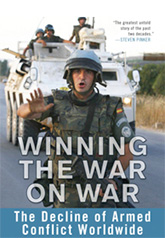 Although we may not realize it from all of the news dispatches dripping with depressing forebodings of disaster either due to economic or glacial meltdown, there are reasons to be optimistic about the current state of the world. Joshua S. Goldstein, in a new book called Winning the War on War: The Decline of Armed Conflict Worldwide, makes the case that the human race is freer from war now than it has ever been. The facts tell a counterintuitive but inspiring story: there are currently no nations at war in the world (only civil wars are going on) and last year had one of the lowest death rates from armed conflict in history.
Along similar lines, Steven Pinker has just published a similar work. Pinker makes the same observation – “we may be living in the most peaceful time in our species’s existence” – but approaches the subject from the perspective of psychology, his field of study, rather than international affairs. Both of these perspectives are worth keeping in mind the next time you hear a pundit on cable news or a sensationalistic author prophesying apocalypse for Western civilization just to get your attention. (more…)
History off the press (September ’11 edition)

Below the fluorescent lights of an auditorium, a professor lectures to students about current historical ideas gleamed from countless of hours of collective research and collegiate debates. A journalist, after decades of reporting on current events in a foreign land, publishes a book about a historical subject she deems particularly important to understanding what is happening there today. A popular film gets released about the past that lights up the public imagination to a certain era of history.
Public recollection of the past happens in many ways. To follow every one of these events, which occur daily, is almost impossible. But patterns emerge from observation, though understanding why they occur is sometimes difficult. In the following previews of new books, I hope to draw attention to trends in the public discourse about history. A more detailed look at the context and causes of these dialogues, though, requires further research.
Fighting to the last
Ever since I first heard the lyrics of Alexander Gorodnitsky’s song “Atlases”, the Siege of Leningrad has become elevated in my mind as an eternal symbol of people’s remarkable ability to endure suffering and emerge victorious. The symbols and metaphors of the song are ingenious. In the famous Hermitage Museum of St. Petersburg, there are sculptures of Atlas from Greek mythology that act as structural columns for a portico . The Soviet men and women who died to stymie the advance of Nazi warriors before Leningrad are, to Gorodnitsky, like the Atlases of the Hermitage, “up-holding the sky / with arms of stone”. (more…)
History off the press (August ’11 edition)

Have your relatives ever told you stories about your ancestors that made you reevaluate your own identity? My grandmother once told me that her father (my great-grandfather) possessed a mellifluous voice and staged concerts for his fellow Allied soldiers imprisoned in a German POW camp during World War I. Hearing this story, it made me question how genetic quality could dissipate so quickly, for my vocal chords can’t produce a single melodic note if my family’s honor depended on it.
Like talking to our grandparents about departed relatives, reading history can change our perspective about our own selves or our community. I selected the books for August (remember, these are previews, not reviews: I have not read these books yet) that drew me in either because they addressed a need for self-knowledge or promised to inform me about the world around me. As a result, almost of them, I noticed later, have to do with U.S. history. But I think our subjectivity is what lights our interest afire. Our bias is our personality, and without it history narratives wither before us like dehydrated fruit.
New York City roots
For several months, I’ve had an itch to discover “literary” neighborhoods in Chicago. Seeking counsel, I asked fellow Chicagoans (full disclosure: I live in the suburbs, not the city proper) where writers live or congregate in the Windy City. No one had an answer, which made me despair that the only destination for writers in the United States was prohibitively-expensive Manhattan. (more…)
History off the press (July ’11 edition)
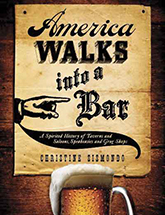 One of my favorite things about reading good history books is that it changes the way you see your environment. Familiar places become more exciting, strangers begin to seem more intriguing, traveling becomes a richer experience, and, if you’re lucky, some of one’s ignorant assumptions are challenged and replaced with insights. It’s like discovering again the sense of wonder about the world that we all had as kids.
The new history books published in late June and early July of this year promise to stretch our minds and offer us to look upon our world with new, unwearied eyes. As I mentioned in the first “History Off the Press” post last month, the books I will feature here were or will be published in late June or July; this list is neither exhaustive nor objective; and I have as yet read none of these publications (except for maybe a preview of the first few pages on Amazon.com).
Rivals of the ancient world
Without imagination, historical evidence seems dull and tragic. We can’t help but feel a patronizing condescension toward our ancestors, whose eroded remains of buildings look like something a child sculpted from sand on a beach and whose stories and myths sound like the imaginings of acid trippers or chauvinistic patriarchs or both.
What I like about Andrea Carandini’s new book, Rome: Day One, is his almost playful combination of taking ancient myths seriously and using colorful narrative writing to vivify the ruins of the ancient imperial city in Rome. Carandini uses the archaeological evidence to argue that the myth of the founding of Rome by Romulus is not far from the truth, that “a king whose name might have been Romulus founded Rome one April 21st in the mid-eighth century BC, most likely in a ceremony in which a white bull and cow pulled a plow to trace the position of a wall marking the blessed soil of the new city.” (more…)
History off the press (June ’11 edition)
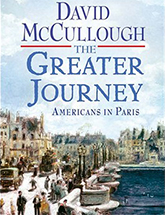 There are perhaps hundreds, if not thousands, of books about historical subjects published every month. This is counting neither the books in foreign languages nor the voluminous scholarly and journalistic articles about history. Trying to follow almost any trend in our well-connected world is a laborious process, and keeping track of newly-published history books is no exception.
What helps me is keeping in mind that history books are not published in a cultural vaccuum. Behind almost every good history publication, there is a continuation going on of a fragmented communal dialogue about the subject. That is, the author is responding to some ideas and stories that previous authors had written about the same historical topic. Sometimes the author may present an argument that contradicts most of what other authors had written before him. At other times, history books are written more in an expository rather than a persuasive style. But all too many history publications are dreadfully boring because the communal discussion about a topic – especially in the community of professional historians – has taken a turn for the “who cares?”
Personally, there are two main qualities that I really prize in a book of history. These are when an author:
- Chooses in writing his book to respond to a historical discussion that is intriguing and insightful, and
- Writes in a style that makes a skillful and effective use of narrative.
In this post, I will feature some history books published in May and early June of 2011 that seem like good reads. I came up with this list by browsing the Web for new releases and then evaluating their quality based on the books’ description and reader reviews. I found samples from new books rarely available online, so admittedly some of these authors’ writing styles may actually turn out to be terrible. Needless to say this list is subjective and not comprehensive, but my goal is to add some kinds of grains of context to new first-editions of history. Let’s begin with books about a topic I’ve written about recently: travel and exploration. (more…)
Subtle intrusions of comfort
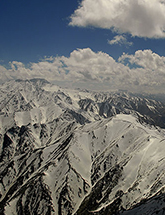 I have recently been reading Pete Blaber’s memoir, The Mission, The Men, and Me: Lessons from a Former Delta Force Commander, about his experiences during training and in combat around the world (including action in Iraq and Afghanistan). As may be gleamed from some of my previous posts, I have a high degree of admiration for battle-tested warriors such as this Chicago-born operative in the military’s perhaps most unconventional unit.
During late 2001 and early 2002, when Americans special forces were making their first incursions into Afghanistan, Pete Blaber was commanding a detachment of advanced force operations (AFO) soldiers. He describes this early phase of the war in Afghanistan as an uncharacteristic one.
The U.S. government, according to Blaber, knew very little about the country they were invading, and special forces were sent in to acquire contextual information and carry out the initial attacks on the enemy. Since the character of the war to come was still unknown, these various units were allowed to organize and operate in a way that did not necessarily reflect their usual departmental divisions. Combat teams were frequently formed and reformed around a mix of AFO, the Green Berets, and CIA agents as need dictated without a regard for traditional military structure. In true special forces fashion, the only thing that mattered was completing the mission no matter how unconventional the means.
Much like I am in awe of master craftsmen who restore old aircraft, I am stunned by the audacity of the challenges that such special forces troops undertake. My confusion about the morality of war aside, when viewed simply as a problem-solving endeavor, the task of entering a hostile country in small teams of a few dozen men to chase out the entire ruling class baffles the mind. Sure the U.S. soldiers were equipped with the latest supplies and technology to help them accomplish this mission (not to mention scores of Northern Alliance soldiers as allies), but as Blaber describes and the U.S. military had to learn the hard way, technology is never a substitute for one of the basic assets of warfare: contextual knowledge of the people, locations, customs, and ways of thinking of others, especially the enemy. (more…)
“The Marketplace of Ideas” by Louis Menand
 Parents, friends, university professors, family members, esteemed colleagues, and new acquaintances: we are gathered here today to answer a very important question. Why did a young man who has been passionate about the study of history his whole life, who has majored in history in college, excelled in its study, and wanted nothing more than to teach and learn about the past for the rest of his life, decide not to go to graduate school?
Let me leave that question hanging in the air of the (empty) auditorium, shrug off the narcissism (it was me speaking about myself, in case anyone had hoped otherwise), and step down from the podium.
The Marketplace of Ideas: Reform and Resistance in the American University by Louis Menand tries to answer the question of how American universities (more specifically, the liberal arts departments of those schools) have become the weird places that they are. For those who pursued a liberal arts education at a large university and don’t agree that they are strange beasts, I present the following observation of Prof. Menand’s:
It takes three years to become a lawyer. It takes four years to become a doctor. But it takes from six to nine years, and sometimes longer, to be eligible to teach poetry to college students for a living. (157)
Why? Menand, in his insightful book, answers the How? by tracing the history of the modern American university from its roots in the late-nineteenth century orientation toward research, through its gargantuan growth during the Cold War with the help of government funding, through the turbulent decades of the late-twentieth century and their epistemological crises (what are we doing this for? why are we here? and what right do we have?), to the current university that we see today.
But . . . Why? Why must a student devote nine years of his life to learn to think and talk in narrow ways, and then spend the rest of his life educating the public whose instincts (for better or worse, but usually for the better) cringe at the sound and sight of this narrowness? (more…)
“On the Road” by Jack Kerouac
 When I was younger, I used to love reading a good book so much that I never wanted it to end, never wanted to say goodbye to its characters. Now, in my relatively more mature years, I rarely get this feeling, though I still love to read good books. Reading the last page about Dean Moriarty, I felt little sadness.
Beat writer Jack Kerouac writes in the last pages of On the Road,
So Dean couldn’t ride uptown with us and the only thing I could do was sit in the back of the Cadillac and wave at him. The bookie at the wheel also wanted nothing to do with Dean. Dean, ragged in a motheaten overcoat he brought specially for the freezing temperatures of the East, walked off alone, and the last I saw of him he rounded the corner of Seventh Avenue, eyes on the street ahead, and bent to it again. Poor little Laura, my baby, to whom I’d told everything about Dean, began almost to cry.
“Oh, we shouldn’t let him go like this. What’ll we do?”
Old Dean’s gone, I thought, and out loud I said, “He’ll be all right.” And off we went to the sad and disinclined concert for which I had no stomach whatever and all the time I was thinking of Dean and how he got back on the train and rode over three thousand miles over that awful land and never knew why he had come anyway, except to see me.
Reading On the Road, I wondered whether the spirit of the character of Dean Moriarty had suffused itself into American culture – I saw it everywhere. The incessant traveler, lover of sights and people and smells, rubbing his belly for joy, sweating, American Odysseus without a home, Walt Whitman re-incarnate. Without Dean Moriarty, the journeys that author Jack Kerouac wrote about that he took with Dean would never have taken place. Dean was the leader. (more…)
“The Few” by Alex Kershaw
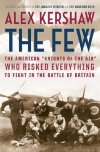 In my mind, the Battle of Britain is the most poignant icon of courage and heroism in history. It’s more epic than Lord of the Rings. It’s almost as if the events of the Battle of Britain came out of somebody’s imagination. I’m baffled that hardly any contemporary movies have been made depicting it.
Since the Norman conquest of 1066, England has never been invaded by a foreign army. This proud nation, which nurtured modern democracy for centuries as the aristocracy chipped away at monarchical power, which controlled the largest empire in human history, found itself, in the summer of 1940, on the verge of destruction at the hands of perhaps the cruelest power in history, Nazi Germany.
The only thing that stood in the path to Britain for the German army was a cadre of British airmen, teenagers and 20-year-olds, about 3,000 strong. Outnumbered and out-gunned, these young Englishmen and their allies beat back the German air force sent to pulverize Britain and prepare it for invasion. Like their ancestors 350 years ago who destroyed the Spanish Armada sent to conquer England, the pilots of the RAF Fighter Command during the Battle of Britain have carved their legacy into the minds of all who are attentive to the drama of history.
“The Few” by Alex Kershaw is an important book because it describes the American contribution to the Battle of Britain. America was officially neutral during the time of the Battle of Britain and trying desperately to stay out of the developing world war. Nevertheless, a few adventurous Americans broke neutrality laws, forfeited their American citizenship, and signed up to fly for the Royal Air Force in defense of Britain during the summer of 1940. There were only eight of them. Americans, who had revolted against King George III in the name of liberty, were now renouncing their American citizenship and swearing loyalty to King George VI, in the name of that same liberty.
The historical importance of the Battle of Britain was not lost on Winston Churchill. He captured the spirit of the glorious moment in his speeches during the summer of 1940. In June, in a speech before the House of Commons, he predicted the legacy the RAF pilots were about to write for themselves:
What General Weygand called the Battle of France is over. I expect that the Battle of Britain is about to begin . . . The whole fury and might of the enemy must very soon be turned on us. Hitler knows that he will have to break us in this island or lose the war. . . Let us therefore brace ourselves to our duties, and so bear ourselves that, if the British Empire and Commonwealth last for a thousand years, men will say, ‘This was their finest hour.’
“The Pacific” and “The Hurt Locker”
 I’m glad Avatar did not win the Academy Award for Best Picture this Sunday, and not just because it was over-hyped. The Hurt Locker was genuinely a much better film. I’ve seen many, many war films and The Hurt Locker was unlike any other. It portrayed a type of soldier that I did not know even existed, but, after seeing the movie, seems very real now. The Hurt Locker is about about a specialist in a U.S. Army Explosive Ordinance Disposal (EOD) team whose personal reasons for fighting in the Iraq War have nothing to do with patriotism, financial need, or even supporting his fellow soldiers. SFC William James is in Iraq because he is addicted to the adrenaline high of high-intensity combat.
The Hurt Locker opens with a quote by a New York Times war correspondent that summarizes the theme of the movie: “The rush of battle is a potent and often lethal addiction, for war is a drug.” For this unique portrayal of war, I think The Hurt Locker deserved all of the Oscars it received.
On another note, I am excited to watch the upcoming HBO miniseries The Pacific. Like the film Saving Private Ryan (1998) and the miniseries Band of Brothers (2001), this is another collaboration by Steven Spielberg and Tom Hanks portraying American soldiers during World War II, this time in the campaign against Japan. I am most curious about from what angle Spielberg and Hanks will approach this series to make it different from the others. Spielberg is such a great artist and storyteller, in my opinion, that this won’t just be “another war film”.
Saving Private Ryan is a monumental film – it’s an icon of the horrific events of D-Day, June 6, 1944, in the imagination of a younger generation of Americans. Band of Brothers is also unique in that it follows a single unit of American paratroopers throughout their combat experiences during the entire war, but in a style similar to another HBO series, The Sopranos, where each episode focuses on a different character to create a portrait of the entire group. What will The Pacific be like? I’m eager to find out (the first episode premieres on Sunday, March 14 at 8p CST on HBO).
On a final note, Christoph Waltz, who won the Oscar for Best Actor in a Supporting Role this year for portraying a Nazi “Jew Hunter” in Inglorious Basterds, performed one of the best feats of acting I have ever seen. If you haven’t seen this movie, go see it if for nothing other than to watch Christoph Waltz portray Standartenführer Hans Landa, whom director Quentin Tarantino described as “one of the best characters I’ve ever written and ever will write”.
 HistoryJournal.org

2 comments