On effective introductions
 Earlier today, I was in a Barnes & Noble store looking for an interesting book. On trips like these, I usually open dozens of books to read or skim the first paragraph, only to shelve them because the way the writer introduces the story doesn’t seize my long-term attention (visitors to my blog may experience a similar feeling reading these posts). I was surprised today when I found an intriguing book less than a minute after entering the store (in the bargain crates before the main entrance, in fact). It was Alex Kershaw’s The Few: The American “Knights of the Air” Who Risked Everything to Fight in the Battle of Britain.
I have browsed this book on previous visits to B&N, only to put it back on the shelf like many others. This (and other similar experiences) suggests to me that why a book catches a viewer’s attention has a lot to do with when it catches his attention: we see the world through different eyes depending on what state of mind we are in. Today, I was drawn to Kershaw’s story by the beautiful poem, written by a young American fighter pilot, Kershaw had reproduced as an introduction to his book (which reminded me of a famous poem by W.B. Yeats). Here is a copy it:
High Flight
Oh! I have slipped the surly bonds of earth
And danced the skies on laughter-silvered wings;
Sunward I’ve climbed, and joined the tumbling mirth
Of sun-split clouds—and done a hundred things
You have not dreamed of—wheeled and soared and swung
High in the sunlit silence. Hov’ring there,
I’ve chased the shouting wind along, and flung
My eager craft through footless halls of air.
Up, up the long, delirious, burning blue
I’ve topped the wind-swept heights with easy grace
Where never lark, or even eagle flew—
And, while with silent lifting mind I’ve trod
The high untrespassed sanctity of space,
Put out my hand and touched the face of God.—John Gillespie Magee, Jr.
Nineteen-year-old American pilot, killed December 11, 1941
History, the History Channel, and Dairy Queen
 You feel a bit silly when you find yourself – an adult man – sitting alone in an otherwise-empty Dairy Queen store, licking a soft-serve ice cream cone. This was the situation in which I found myself yesterday after I deposited a check at my bank and, pulling out of the parking lot, decided to park again and buy some ice cream. I usually don’t have cravings for ice cream during late winter, but this time I couldn’t resist.
I’ve been visiting this shopping plaza biweekly for the past four months, and yesterday (Friday) was the first time I’ve noticed that there was a Dairy Queen store next door to my bank. I usually ignore Dairy Queens for the same reason I ignore Baskin-Robbins and Dunkin’ Donuts: I hate their pink signs and bubbly graphic art trying to convince me everybody’s having a good time inside the store when it’s actually usually empty. It’s inauthentic and corporate and depressing.
Those were my thoughts about Dairy Queen until this Thursday, when I had come home from work and, in lieu of going to the gym, had decided to watch an episode of Modern Marvels about ice cream on the History Channel. I used to think Modern Marvels – a documentary series about modern technology – was an impostor on the History Channel, taking up valuable air time that could be better utilized by a show about the history of the samurai, the story of the Romanov dynasty, or even yet another special about World War II. But I’ve recently come to respect Modern Marvels for doing what good history does as well: make the present artificial world (what humans create apart from the natural world) more understandable.
In his classic book of popular philosophy, Zen and the Art of Motorcycle Maintenance, Robert Pirsig claims that the reason many people in the modern world feel alienated by the sight of technology (imagine the feeling you get driving past an electric power station) is because they don’t understand the “mind” behind the metallic beast. That is, if they only understood how technology worked, people would feel a lot less threatened by it. In fact, they would perhaps even begin to think of the electric power station as almost beautiful.
The Modern Marvels episode I watched on Thursday described the technology of making ice cream, as well as the history of the famous franchise Dairy Queen, the originators of soft-serve ice cream. I was surprised to see a photo of the grand opening of the first Dairy Queen in 1940 in Joliet, Illinois: throngs of families crowding the store on a hot summer day. The franchise spread, and Dairy Queens became almost emblematic of small-town American life in the 1950s and 1960s.
After watching about the technology and history of ice cream in America on Thursday, I felt it fitting and proper on Friday, when I noticed for the first time the Dairy Queen (now known as “DQ”) next to my bank , that I would stop by and take part in an American ritual. The store was empty, as I expected. A women’s college basketball game was playing on a flat-screen TV in the back of the store. The graphic design in the store looked like it was imported from a design agency in New York or California which no doubt held many meetings to come up with a way to convey the message, through bright signs printed on cheap and durable materials, of “zany”.
I ordered a cone with a stack of puffy soft-serve ice-cream layers that I remembered seeing on Modern Marvels. I sat at a booth and enjoyed my dessert while looking at the framed photographs hung on the wall: black-and-white, showing Dairy Queen shops of the past, the only monochrome design elements in the store. I thought to myself that I looked out of place here because a grown man should not be eating ice cream alone, especially in the evening during winter.
Before I finished my cone, a man had walked into the store, the only other customer aside from me. He had graying hair and was dressed in neat business-casual attire. He too ordered soft serve and sat at a booth by the main door. Another grown man buying an ice-cream cone by himself – perhaps I wasn’t so crazy after all. On my way out of the DQ, I passed by the man: he was eating his ice cream and typing on a Blackberry.
Walking by his Lexus SUV in the parking lot, I imagined that the man in the DQ had grown up in the 1960s in one of those small towns I had heard about on the History Channel. He would go to the Dairy Queen with his parents and siblings, and there would be neighbors and friends that he expected to see there. I imagined that now, in his 50s, that man sometimes drives by a DQ and childhood memories prompt him to stop, come inside, and partake of a dead ritual. I thought about this while I drove home.
My recent work as a web designer has made me more sensitive to art and design in my environment. I can walk into a zany Baskin-Robbins/Dunkin’ Donuts combo store without feeling sick with myself as I used to feel, because now I understand the design process that went into creating the persuasive graphical monstrosity that permeates such corporate places. But understanding something foreign and powerful doesn’t necessarily mean you want to be on board. Sometimes the bright-and-colorful relics of the present are more dead than the black-and-white memories of the past.
“WWII in HD” — transformative and balanced
 Gone are the days when the History Channel disproportionately focused on programs about World War II instead of disproportionately fixating on Bigfoot and Mayan prophecies. Until now. History Channel has a new series which stands apart from the network’s bizarre trend of shows about UFOs, astrology, and monster-hunters. “WWII in HD”, a throwback to History Channel’s roots, is a truly innovative series.
“WWII in HD” features almost exclusively rare color war footage. The effect of this is to enliven the 1940s. It feels like watching film from the Vietnam War, which seems more “real” to me because I associate it with color.
The other outstanding element about this series is the dialogue. The show follows twelve American men and women during their service in the war. They are interviewed as elderly veterans, but when the war footage is shown, the interviews transition into voice-overs by younger men and women. This technique is elegantly executed and makes you aware that these aged heroes of an inaccessible age were once the youth of the world. The dialogue is poignant, and the transitional phrases especially are epic.
Finally, the most lasting impression of the series is the footage of carnage. I have heard veterans speak of that shocking aspect of war – the odor of burning flesh, bodies thickly littering the battlefield, disfigured faces. But hearing about it—no matter how vividly told—can not compare to seeing it in color. Short of smelling the awful stench of war, “WWII in HD” portrays the nauseating reality of indiscriminate and grotesque death in battle.
In one episode, President Franklin Roosevelt asks a war correspondent whether he should allow a documentary film about the Battle of Tarawa to be show uncensored to the American public. The reporter, who had been embedded with the Marines in combat, replied that the soldiers wanted the civilians back home to know that the war was not all about victory and glory. The documentary, which featured graphic portrayals of combat, went on to win an Academy Award and significantly increased the sale of war bonds. Like “With the Marines at Tarawa”, “WWII in HD” is a transformative and balanced memorial to the Second World War.
My memories of the end of the Cold War
 In the early 1990s, Russian-Americans joked that bananas were the national food of Russia, because newly arrived Russian immigrants to America would eat them zealously and in abundance. Of course, quite the opposite was true. Bananas were scarce in the Soviet Union so Russians who moved to Western countries were simply making up for lost time. My parents like to remember that shortly after our family’s arrival to the United States, I declared, “I will never get sick of bananas!”
That was the end of 1992, and I was seven years old. Since then, years of consuming banana slices with morning cereal or in cafeteria fruit medleys have eroded my—and perhaps most Russian-Americans’—enthusiasm for the fruit. Time heals all wounds and also dissipates all wonder. On November 9, 1989, the Iron Curtain was lifted, and for the first time in decades, East Germans crossed over the Berlin Wall, which would be dismantled in the weeks that followed. I don’t remember any of this, as I was only four years old. The only political events I remember appreciating while I lived in the Soviet Union were the inflation of the Soviet (then Belarusian) currency and Mikhail Gorbachev’s house arrest in August 1991. He graciously waved to me through the television screen in my grandparents’ living room and was worried, a journalist said, about his political enemies poisoning his food as they held the country hostage for four days. I was impressed by his calmness.
This is all I remember, though, of what the Economist recently described as the “most remarkable political event of most people’s lives . . . [which] set free millions of individuals and . . . brought to an end a global conflict that threatened nuclear annihilation.” I was young and years of living in the United States have made the Soviet Union, the Cold War, and Gorbachev memories from another lifetime. But this morning, twenty years to the day when the Iron Curtain fell, my father and I ceremoniously split a banana in two and each ate a half, savoring every bite.
This Day in History: Nazi Germany invades the Soviet Union
On June 22, 1941, Nazi German armies invaded the Soviet Union, catching the Red Army by surprise and destroying thousands of Soviet airplanes before they even had a chance to take off from the ground. The ensuing battle, known as Operation Barbarossa, lasted until the winter of that year and, according to Wikipedia, “remains the largest military operation, in terms of manpower, area traversed, and casualties, in human history.” I read a few articles (you can tell from which impeccably-reliable source) today about this event and learned a few interesting points.
The mainstream scholarly view of the invasion holds that the Germans caught Joseph Stalin completely by surprise, which explains the heavy Soviet casualties in the beginning of the campaign. A Russian author, Viktor Suvorov, has recently challenged this traditional view with a theory that the Soviets were actually planning an invasion of Germany in 1941 but were beaten to the offensive. This is an ongoing debate among scholars, especially since Suvorov’s theory is largely based on circumstantial evidence (for instance, that the Soviets were developing offensive technologies such as this ridiculous-looking flying tank). Another interesting scholarly controversy I encountered was why the conflict on the Eastern Front of World War II is not well known in America. A recent book, The Myth of the Eastern Front: The Nazi-Soviet War in American Popular Culture, tackles this question. Although my reading on the subject of Operation Barbarossa has been brief today, there are many interesting avenues for further study.
Colbert calls for poetry revival
I enjoyed last night’s interview on the Colbert Report of poet Paul Muldoon, especially how Stephen Colbert tried to popularize poetry by reading one of Prof. Muldoon’s works, “Tea”. As Colbert mentioned, poetry is not cool in today’s America. In a country with a strong democratic spirit, perhaps it seems like an artifact of antiquated aristocratic habits. Quote a poem at a social event and you are sure to sound like a snob.
But this decline in popularity is not entirely the public’s fault. I think poetry, like other arts influenced by academia, has evolved to be too cerebral for the public’s taste. And what a shame!
Well-crafted verse, like no other art, has the power to preserve for posterity emotions, the spirit of an age, and even morals. I heard a contemporary scholar criticize Walt Whitman for writing some of his poems in rhyme. But how well Whitman captured the spirit of a historical moment – the national mood upon the assassination of President Lincoln soon after the end of the Civil War – in his rhyming poem “O Captain! My Captain!”! It is rightly so that this poem is remembered above others in the compilation, Memories of President Lincoln, because it not only delivers a powerful message but also does it so pleasurably (one need not overstrain his brain to understand it).
My hope is that poetry does experience a revival. Words beautifully prepared and powerfully spoken are one of life’s greatest joys.
How do we remember D-Day?
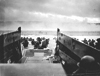 Twelve days ago was the 65th anniversary of the American and British invasion of Nazi-occupied Normandy. The events of June 6, 1944, D-Day, are worthy subject matter for an epic poem by Homer himself. As the ancient Greeks landed on the beach of Asia Minor to lay siege on Troy thousands of years ago, so too the Allied soldiers of World War II disembarked from their landing craft, assaulted the German defense bunkers and machine-gun nests, and began the liberation of continental Europe. The Allies even prepared a Trojan horse of their own: deception programs named Operation Fortitude and Operation Bodyguard fooled the Germans into expecting an Allied amphibious assault in anywhere but Normandy.
How do we in the United States remember D-Day? As an expatriate of the former Soviet Union, I had observed in that country a reverence of its victories during World War II bordering on worship. The business of the Soviet people halted every year for Victory Day; parades, recollection, thanksgiving, military pageantry, and storytelling about the war permeated the land. This is not the way we remember D-Day in America. A few newspaper articles buried underneath other headlines and a visit by President Obama to the military cemetery in France sufficed as our annual memorial of this event. There definitely did not seem to be a national spirit of remembrance.
What story will we tell about this epic day in American history? Will it be a Homeric tale of heroes and timeless deeds? For Christians, do the Scriptures – which ascribe all glory to God – preclude us from remembering it in this way? To forget altogether, due to laziness or otherwise, would be a loss to culture. While recently reading Walt Whitman’s poem about the end of the American Civil War, “Spirit Whose Work is Done”, I thought that his invocation could well apply to the memory of this more recent war:
“[. . .] Spirit of hours I knew, all hectic red one day, but pale as
death next day,
Touch my mouth ere you depart, press my lips lose,
Leave me your pulses of rage – bequeath them to me – fill me
with currents convulsive,
Let them scorch and blister out of my chants when you are
gone,
Let them identify you to the future in these songs.”
“The Trials of Henry Kissinger”: a provocative documentary

The Trials of Henry Kissinger is a documentary by Eugene Jarecki, who also directed Why We Fight. This film has challenged my opinion of Henry Kissinger, who I previously admired for his reputation of being a brilliant diplomat. Genius strategist he was, the documentary admits, but Jarecki also makes the case that Kissinger had committed war crimes that resulted in the deaths of many innocent civilians. According to the documentary, Kissinger allegedly sabotaged peace talks to end the Vietnam War in 1968 (resulting in two more years of bloody conflict), authorized illegal bombings of Cambodia (destabilizing the country which led to the Khmer Rouge genocide), and armed the Indonesian army for mass-murder in East Timor, among other atrocities.
Kissinger has never faced trial for any of these charges. Future historians will judge – when more evidence has been released to the public – whether he was in actuality a war criminal who cared for nothing other than his political ambitions. Though Kissinger will most likely die a free, wealthy, and respected man (unlike the Ottoman sultan Beyazit, whose ambitions led to a degrading demise), if he was guilty, he still serves a sentence no criminal can avoid. This is the punishment suffered by Rodion Raskolnikov in Dostoevsky’s Crime and Punishment. The documentary ends with these words:
“I do think that somewhere down deep he knows what he was doing, he knows it was against a lot of first principles, which is why so much is masked and hidden. There’s so much distrust. It’s a very, very sad way to go through your life. Whatever he did, whatever he accomplished, I’m not sure it’s worth it, because he had to live a lot more years. He’s been out of power for a long time: 25 years now. In it’s own way, the reason I don’t worry about war crimes or anything else is he’s got his own sentence, he’s got to live with himself.”
 HistoryJournal.org
1 comment