My memories of the end of the Cold War
 In the early 1990s, Russian-Americans joked that bananas were the national food of Russia, because newly arrived Russian immigrants to America would eat them zealously and in abundance. Of course, quite the opposite was true. Bananas were scarce in the Soviet Union so Russians who moved to Western countries were simply making up for lost time. My parents like to remember that shortly after our family’s arrival to the United States, I declared, “I will never get sick of bananas!”
That was the end of 1992, and I was seven years old. Since then, years of consuming banana slices with morning cereal or in cafeteria fruit medleys have eroded my—and perhaps most Russian-Americans’—enthusiasm for the fruit. Time heals all wounds and also dissipates all wonder. On November 9, 1989, the Iron Curtain was lifted, and for the first time in decades, East Germans crossed over the Berlin Wall, which would be dismantled in the weeks that followed. I don’t remember any of this, as I was only four years old. The only political events I remember appreciating while I lived in the Soviet Union were the inflation of the Soviet (then Belarusian) currency and Mikhail Gorbachev’s house arrest in August 1991. He graciously waved to me through the television screen in my grandparents’ living room and was worried, a journalist said, about his political enemies poisoning his food as they held the country hostage for four days. I was impressed by his calmness.
This is all I remember, though, of what the Economist recently described as the “most remarkable political event of most people’s lives . . . [which] set free millions of individuals and . . . brought to an end a global conflict that threatened nuclear annihilation.” I was young and years of living in the United States have made the Soviet Union, the Cold War, and Gorbachev memories from another lifetime. But this morning, twenty years to the day when the Iron Curtain fell, my father and I ceremoniously split a banana in two and each ate a half, savoring every bite.
This Day in History: Nazi Germany invades the Soviet Union
On June 22, 1941, Nazi German armies invaded the Soviet Union, catching the Red Army by surprise and destroying thousands of Soviet airplanes before they even had a chance to take off from the ground. The ensuing battle, known as Operation Barbarossa, lasted until the winter of that year and, according to Wikipedia, “remains the largest military operation, in terms of manpower, area traversed, and casualties, in human history.” I read a few articles (you can tell from which impeccably-reliable source) today about this event and learned a few interesting points.
The mainstream scholarly view of the invasion holds that the Germans caught Joseph Stalin completely by surprise, which explains the heavy Soviet casualties in the beginning of the campaign. A Russian author, Viktor Suvorov, has recently challenged this traditional view with a theory that the Soviets were actually planning an invasion of Germany in 1941 but were beaten to the offensive. This is an ongoing debate among scholars, especially since Suvorov’s theory is largely based on circumstantial evidence (for instance, that the Soviets were developing offensive technologies such as this ridiculous-looking flying tank). Another interesting scholarly controversy I encountered was why the conflict on the Eastern Front of World War II is not well known in America. A recent book, The Myth of the Eastern Front: The Nazi-Soviet War in American Popular Culture, tackles this question. Although my reading on the subject of Operation Barbarossa has been brief today, there are many interesting avenues for further study.
How do we remember D-Day?
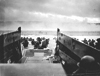 Twelve days ago was the 65th anniversary of the American and British invasion of Nazi-occupied Normandy. The events of June 6, 1944, D-Day, are worthy subject matter for an epic poem by Homer himself. As the ancient Greeks landed on the beach of Asia Minor to lay siege on Troy thousands of years ago, so too the Allied soldiers of World War II disembarked from their landing craft, assaulted the German defense bunkers and machine-gun nests, and began the liberation of continental Europe. The Allies even prepared a Trojan horse of their own: deception programs named Operation Fortitude and Operation Bodyguard fooled the Germans into expecting an Allied amphibious assault in anywhere but Normandy.
How do we in the United States remember D-Day? As an expatriate of the former Soviet Union, I had observed in that country a reverence of its victories during World War II bordering on worship. The business of the Soviet people halted every year for Victory Day; parades, recollection, thanksgiving, military pageantry, and storytelling about the war permeated the land. This is not the way we remember D-Day in America. A few newspaper articles buried underneath other headlines and a visit by President Obama to the military cemetery in France sufficed as our annual memorial of this event. There definitely did not seem to be a national spirit of remembrance.
What story will we tell about this epic day in American history? Will it be a Homeric tale of heroes and timeless deeds? For Christians, do the Scriptures – which ascribe all glory to God – preclude us from remembering it in this way? To forget altogether, due to laziness or otherwise, would be a loss to culture. While recently reading Walt Whitman’s poem about the end of the American Civil War, “Spirit Whose Work is Done”, I thought that his invocation could well apply to the memory of this more recent war:
“[. . .] Spirit of hours I knew, all hectic red one day, but pale as
death next day,
Touch my mouth ere you depart, press my lips lose,
Leave me your pulses of rage – bequeath them to me – fill me
with currents convulsive,
Let them scorch and blister out of my chants when you are
gone,
Let them identify you to the future in these songs.”
Best world war flight sims
Ever since I was little, I have admired the courage of combat aviators in both of the world wars. While aircraft in the First World War buzzed inconsequentially above the front lines where the decisive battles were fought, the pilots who confronted one another – without parachutes, in open-cockpit aircraft that resembled kites more than jets – must have had some large cojones. In the Second World War, a couple of thousand Spitfire and Hurricane pilots (“The Few” as Churchill called them) staved off the conquest of an entire nation in the Battle of Britain.
While my days of hours spent waxing heroic in the online skies of such flight simulators as WarBirds are long behind me, I have caved in to curiosity and decided to research which is the best flight sim for the world wars. The winner for the Second World War category is Battle of Britain II: Wings of Victory. While other sims like IL-2: Sturmovik and Microsoft Combat Flight Simulator 3 are more popular due to their multiplayer option, Battle of Britain II is the most realistic (notice how closely the gameplay mimics real guncams from World War II in this beautiful YouTube clip). This game alone also features air battles with up to 200 planes, truly approximating the sorties in the real Battle of Britain. There is a devoted Battle of Britain II online community, where there has recently been talk of adding multiplayer to the game.
The best World War I flight sim is First Eagles: Gold, which simulates air combat in the latter years of the war. Games of this era have never been as popular as World War II flight sims, so I can’t imagine the multiplayer community for First Eagles is very strong. Nevertheless, this is the most recent incarnation of the genre and the gameplay looks decent (see this YouTube video of a Sopwith Camel dogfighting with a Fokker Dr. I). While combat flight sims have declined in popularity since the 1990s and early 2000s when it seemed that every year competing companies were releasing a new hit (Battle of Britain II was released in 2005 and First Eagles in 2006), the genre seems to have at least reached a high plateau with its leading exemplars.
 HistoryJournal.org
leave a comment