Driving at the speed of flight
 I can’t say I enjoy Jay Leno’s jokes as much as I do the work of Jon Stewart, Stephen Colbert, and David Letterman. But man does the guy have an awesome car collection.
I know next to nothing about vintage car restoration, but I can appreciate a sleek-looking and rumble-producing automobile. When I came across Jay Leno’s video of his 1915 Hispano-Suiza Aero Engine Car restoration (see part 1, part 2 and part 3), though, I almost started drooling. The reason is because the restored car combines in an engaging package some things that, well, just make me salivate like a dog sensing dinner: aviation, World War I history, craftsmanship, and speed.
The 1915 machine is no ordinary automobile. It’s fitted with an engine taken from a World War I fighter airplane. As Wikipedia informed me, after the First World War ended, surplus airplane engines were relatively cheap and vastly more powerful than what cars were then using. Some auto engineers decided not to let this opportunity pass and created cars with automobile chassis and airplane engines. Such aero-engined cars were a brief trend in auto racing during the inter-war period.
The Hispano-Suiza engine is the motor that was used to power the S.E.5, a British fighter plane during World War I. This was the primary aircraft of No. 56 Squadron RFC (Royal Flying Corps), the famous unit of expert flyers and warriors—such as James McCudden, Albert Ball, and Cecil Lewis (the last of whom wrote a now-rare but fascinating and honest memoir of his war years, titled Sagittarius Rising)—who helped defeat the imperial German air force. (more…)
History off the press (September ’11 edition)

Below the fluorescent lights of an auditorium, a professor lectures to students about current historical ideas gleamed from countless of hours of collective research and collegiate debates. A journalist, after decades of reporting on current events in a foreign land, publishes a book about a historical subject she deems particularly important to understanding what is happening there today. A popular film gets released about the past that lights up the public imagination to a certain era of history.
Public recollection of the past happens in many ways. To follow every one of these events, which occur daily, is almost impossible. But patterns emerge from observation, though understanding why they occur is sometimes difficult. In the following previews of new books, I hope to draw attention to trends in the public discourse about history. A more detailed look at the context and causes of these dialogues, though, requires further research.
Fighting to the last
Ever since I first heard the lyrics of Alexander Gorodnitsky’s song “Atlases”, the Siege of Leningrad has become elevated in my mind as an eternal symbol of people’s remarkable ability to endure suffering and emerge victorious. The symbols and metaphors of the song are ingenious. In the famous Hermitage Museum of St. Petersburg, there are sculptures of Atlas from Greek mythology that act as structural columns for a portico . The Soviet men and women who died to stymie the advance of Nazi warriors before Leningrad are, to Gorodnitsky, like the Atlases of the Hermitage, “up-holding the sky / with arms of stone”. (more…)
History off the press (August ’11 edition)

Have your relatives ever told you stories about your ancestors that made you reevaluate your own identity? My grandmother once told me that her father (my great-grandfather) possessed a mellifluous voice and staged concerts for his fellow Allied soldiers imprisoned in a German POW camp during World War I. Hearing this story, it made me question how genetic quality could dissipate so quickly, for my vocal chords can’t produce a single melodic note if my family’s honor depended on it.
Like talking to our grandparents about departed relatives, reading history can change our perspective about our own selves or our community. I selected the books for August (remember, these are previews, not reviews: I have not read these books yet) that drew me in either because they addressed a need for self-knowledge or promised to inform me about the world around me. As a result, almost of them, I noticed later, have to do with U.S. history. But I think our subjectivity is what lights our interest afire. Our bias is our personality, and without it history narratives wither before us like dehydrated fruit.
New York City roots
For several months, I’ve had an itch to discover “literary” neighborhoods in Chicago. Seeking counsel, I asked fellow Chicagoans (full disclosure: I live in the suburbs, not the city proper) where writers live or congregate in the Windy City. No one had an answer, which made me despair that the only destination for writers in the United States was prohibitively-expensive Manhattan. (more…)
Checking the stove, checking it twice
 No matter how late I’m running for an appointment or how urgently I need to put my shoes on and exit the house now, I always have time before I leave to check the stove… twice.
No, there’s nothing wrong with the appliance. The stove/oven range sits snuggly embedded inside of a curving pathway of granite countertop and contends favorably with the dishwasher for the title of swankiest object in the kitchen. It has no known malfunctions.
What I’m interested in is making sure that, before I leave the house, I haven’t left the stove “on”. It just takes two (on rare occasions, three) separate trips within the span of about two minutes for me to be really convinced of the stove’s neutrality.
I’ve grown used to this habit, but the irrationality of repeating this rite at least once a day has its own consequences. The Stove has acquired powers of awful proportions. One burner left carelessly open during the course of a workday, and the entire house – my laptop, my Kindle, my papers, my books, my musical instruments, my pets, my paperwork – will be licked away by property-destroying flames (or so I think). The stove represents a solitary seed of chaos-potential in the otherwise predictable routine of life.
So it must be monitored with the care that one reserves for an errant child with a bent toward pyromania. And if one has to swing through the kitchen an extra time because one wasn’t convinced that one sufficiently scrutinized the status of every burner knob (including the slow-cooker’s) the first time, then it’s a necessary evil. (more…)
Symbolic reactions
 In the deserts of the Middle East, goatskin seems to have been the material of choice for transporting water. This seemed strange to me when I first read about it in Wilfred Thesiger’s account of his travels in the sands of the Arabian Peninsula with the Bedouins. The way he described it, it seemed these goatskins had a tendency to sweat in the blistering sun and tear and leak their irreplaceable cargo as the nomads traveled from well to well.
Thesiger’s narrative formed images in my mind: the goatskin containers bulging with water and bouncing on a camel’s back; moisture congealing on the skins and falling in small droplets to sizzle on the sand; the Bedouins (and Thesiger with them) drinking gladly the animal-scented liquid at the end of a long day’s ride. Soon these water-bearing goatskins became for me part of a larger symbolism that I had affixed to the Bedouin lifestyle.
The nomadic Arabs were a complex people in Thesiger’s account. Ready to drive a knife through the chest of a child from a competing tribe if the customs of a blood-feud demanded it, the same Bedouin man would literally give the last shirt off his back or the last swigs of camel’s milk to a stranger who happened upon his camp. To me, reading and re-reading Thesiger’s book, Bedouins came to represent a love of freedom, a fraternal devotion to clan, and a proud contentedness with simple living.
But I have never met any real Bedouins (I’m not counting the hospitable entertainers of Bedouin descent who served coffee and rice for our Birthright Israel group before returning to their mansion in the desert for the night). Bedouins, along with their goatskin water bottles that I have never actually seen, exist only in my mind as symbol and metaphor. (more…)
History off the press (June ’11 edition)
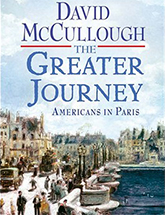 There are perhaps hundreds, if not thousands, of books about historical subjects published every month. This is counting neither the books in foreign languages nor the voluminous scholarly and journalistic articles about history. Trying to follow almost any trend in our well-connected world is a laborious process, and keeping track of newly-published history books is no exception.
What helps me is keeping in mind that history books are not published in a cultural vaccuum. Behind almost every good history publication, there is a continuation going on of a fragmented communal dialogue about the subject. That is, the author is responding to some ideas and stories that previous authors had written about the same historical topic. Sometimes the author may present an argument that contradicts most of what other authors had written before him. At other times, history books are written more in an expository rather than a persuasive style. But all too many history publications are dreadfully boring because the communal discussion about a topic – especially in the community of professional historians – has taken a turn for the “who cares?”
Personally, there are two main qualities that I really prize in a book of history. These are when an author:
- Chooses in writing his book to respond to a historical discussion that is intriguing and insightful, and
- Writes in a style that makes a skillful and effective use of narrative.
In this post, I will feature some history books published in May and early June of 2011 that seem like good reads. I came up with this list by browsing the Web for new releases and then evaluating their quality based on the books’ description and reader reviews. I found samples from new books rarely available online, so admittedly some of these authors’ writing styles may actually turn out to be terrible. Needless to say this list is subjective and not comprehensive, but my goal is to add some kinds of grains of context to new first-editions of history. Let’s begin with books about a topic I’ve written about recently: travel and exploration. (more…)
Reed-Turner Woodland
 I have been watching reruns of Man vs. Wild lately. So when I saw the crumbling heap of a burned-down tree, my first reaction was to squirrel away some bits of its charcoal in my pockets. In a survival situation, these would be a valuable source of tinder to make a fire. But being twenty paces from my Ford Escort (and five minutes’ drive from the nearest Starbucks), I decided that I was not in a predicament to start hoarding the essentials.
Rather, I was in Reed-Turner Woodland, a small nature preserve in Long Grove, Illinois. It was early morning, and by whim I had turned into the woodland off of Old McHenry Road on my way to work. I parked my car in the empty gravel lot and decided to look around before resuming my commute.
Most of the forest preserves in this part of Illinois are bleak and dull. They usually occupy small plots. One gets the impression that there were no natural forests here before European settlement, or at least none worth saving. The trees leaf sparsely, and the new vegetation on the ground seems to struggle every spring and summer to overcome the decaying matter of the previous fall. If the municipal caretakers did not regularly remove dead trunks and carve channels into the riverbanks, then one can’t help but imagine that the streams would dry up and the forest itself would wither until the entire crumbling mass would finally be swept away in a prairie fire.
But Reed-Turner seemed different somehow. It was my first time there, and I decided that I had half an hour to explore the forest trails before continuing on my way to work. The trail started at the parking lot and sauntered along the edge of the woods. I hiked past the burnt-down tree – most likely culled by the village authorities because it grew too close to the road, I thought. Heading deeper into the small preserve, I heard occasional shuffling noises coming from left and right. This made me uneasy. The last time I hiked more than a day in real wilderness was five years ago. I was out of the habit and my mind feared the worst. Was that branch breaking a sure sign of a prowling coyote? Skunks and raccoons, too, would be unpleasant characters to encounter. (more…)
World War I and the unconscious
 I was in Barnes & Noble earlier today and, intrigued by the cover of the latest Time magazine (which oddly featured a full-page photograph of Abraham Lincoln), I realized that the 150th anniversary of the beginning of the Civil War is coming up in three days (April 12, 2011). Such numerically-significant anniversaries are rare occasions for the national discourse to turn and (briefly) examine the significance of history to contemporary life. I always seem to miss these kinds of precious discussions. Currently, I’m working through Paul Fussell’s The Great War and Modern Memory and am still on the early-20th-century wavelength (oh! where was the 150th anniversary of the firing on Ft. Sumter when I was reading Paul Menand’s The Metaphysical Club and was on my Civil War “kick”?).
Fussell’s book, though, is yielding too much nutritious food for thought to put aside. In the chapter titled “Adversary Proceedings”, Fussell quotes 20th-century psychologist Carl Jung for whom the First World War was such a such a strong influence that it crept into his dreams after (and, if we are to believe his enigmatic Red Book, even before) the war:
[Jung] dreamed that he was ‘driving back from the front line with a little man, a peasant, in his horse-drawn wagon. All around us were shells exploding, and I knew that we had to push on as quickly as possible, for it was very dangerous [. . .] The shells falling from the sky were, interpreted psychologically, missiles coming from the “other side.” They were, therefore, effects emanating from the unconscious, from the shadow side of the mind [. . .] The happenings in the dream suggested that the war, which in the outer world had taken place some years before, was not yet over, but was continuing to be fought within the psyche.’
Reading this quote by Jung made me think of something that has fascinated me about psychology for some years. Specifically, it’s been a mystery to me how widely the ideas of Sigmund Freud, the founder of psychoanalysis and an iconic figure, were taken up by the Western world and how deeply ingrained some of them have become even though many of his theories were not very scientific. (more…)
The death of “high” diction
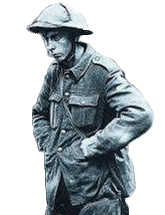 Like anyone who reads a lot of books written before one’s grandparents were born, the imaginary world of literature and history begins in the mind to contend with the perception of the immediate world of real life. Outmoded words begin to enter the vocabulary, and must be consciously prevented from escaping into the daylight of ordinary conversation. One instinctively knows that words like “valor”, “comradeship”, and “foe” have no place in everyday language (“How was your basketball game today?” “Oh, it was a great! My comrades and I vanquished the foe 3-1.”) though words such as these crop up in older writings all of the time. Like chivalry, these “high” forms of speaking are now dead. But what killed them?
This week, I started reading The Great War and Modern Memory (1975) by Paul Fussell, which describes the traumatizing shock that the First World War delivered to the Western psyche. To die with the millions of soldiers in combat was a European idea about the perfectibility of mankind and society. The effect of this collective experience lasts to this day, even in America.
The summer before the war, the summer of 1914, was memorable for its picnic-perfect weather. During these warm summer months, Europe (especially Britain, which hadn’t really seen war for a hundred years) breathed the air of chivalry, romanticism, and boundless self-confidence for the last time. The shock of the war to come contrasted so sharply with the idyllic season before it (Fussell describes at length in the first chapter how this dichotomy created a sharp and enduring impression of the irony of life on the Western psyche), that “the summer of 1914” would for many decades become synonymous with astonishing naiveness.
To illustrate how this change took place, Fussell relates a handful of the countless ironic (meaning, having one’s optimistic hopes about the future punished with exaggerated misery instead) experiences that soldiers witnessed during the war. Fussell quotes one instance from another author’s memoir: (more…)
Goal-oriented
 I used to get a lot more excited about goals that I set for myself than I do now. Now, I’ve grown to mistrust any kind of concrete goal to such an extent that, believe it or not, I still haven’t written down my New Years Resolutions for 2011 even though I fully intend to at some point (I like to tell myself).
This week, I’ve been reading Dave Goetz’s Death by Suburb, a study of how to improve a suburbanite’s “spirituality”. In his chapter titled “Inside Space”, Goetz discusses this idea of goal futility.
Not to echo here the disillusionment of Ecclesiastes (you know, “Vanity of vanities! All is vanity”) but it seems impossibly hard to correlate happiness with goal achievement. The suburbs are a great illustration of this idea.
The suburban environment is one where individuals are cloistered into safe and sanitary housing units where each person creates goals, capitalizes on the abundant opportunities available, and then amasses the spoils of his labor in the form of goods or social status. It’s almost the epitome of “the good life”. And yet almost anyone who actually experiences this kind of lifestyle will feel some sort of dissatisfaction with goal achievement.
The new car just doesn’t seem so satisfying a few months after the purchase (but how much work went into affording it). The mansion seems a lot better as an idea than as a reality. Yes, the friends will be impressed, but why do I need to lord it (or anything) over them? And what do I admire about the thing itself – the spaciousness, the beauty of the woodwork and wall colors and flooring? The outdoors are spacious too and there are much more beautiful buildings to be seen in the city. I must just want to possess this immensity and this beauty as my own.
And yet these goals require so much – perhaps, all – of our work capacity to fulfill. For someone like me who always needs a plan to feel at ease with himself, it’s maddening that the things that really matter to us – love, vocation, relationships – we can’t really achieve by setting any kind of goals. Goetz thinks that relinquishing control and embracing silence can help a suburbanite find the peace of mind of which the achievement race robs us. I don’t know about this; I just think it’s maddening that we can’t goal-orient towards happiness.
 HistoryJournal.org

leave a comment