New history books (July 2012 edition)

Scholarship of an empire
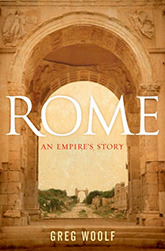 There are really two narratives of the Roman empire. The first one picks up where the Iliad ends, follows the story of Aeneas until the time of the early kings of Rome, observes with admiration the Roman republic, and illustrates the glories and flaws of the Roman emperors. This is the traditional story of ancient Rome.
The second type of narrative is the academic one, which often leaves chronology by the wayside and examines the Roman empire by topic, often sociologically. Greg Woolf’s new book, Rome: An Empire’s Story, seems to be written for the niche of people who are well familiar with the first, traditional, narrative of Rome but have no knowledge of (but a desire to learn) the second, scholarly, dialogue about the empire.
Although Woolf’s writing didn’t inspire an enormous amount of enthusiasm from this reader, the most interesting chapter for me was the second one: “Empires of the Mind.” Reading this chapter made me wonder why it was that Rome apart from all other ancient empires has such a lasting existence in our world. Woolf here also discusses sociological categorization of empires and describes Rome as a conquest state, an entity dependent on political expansion for its very survival. I think such a breakdown of terms like “empire” is useful because, without further reflection, one may assume erroneously that the Roman empire was more similar to, say, the American empire than was actually the case. The United States may arguably be an imperial power but it is not a conquest state. (more…)
U-boats in World War I
 I’ve been interested in submarine warfare 0f the Second World War since I was in middle school. There are a lot of books written in English about the German U-boat campaign targeting Allied ships in the Atlantic and also the American submarine war against Japanese merchant shipping in the Pacific. Relatively little has been written in recent times, though, about submarine operations of any nation during the First World War.
That’s why I was happy to discover a copy of Edwyn Gray’s book, The U-boat War: 1914-1918 (which was originally published in the 1970s as The Killing Time) in Manhattan’s mecca for rare books: the Strand Book Store. I’m really glad I bought this book, because after reading it, I disabused myself of several erroneous notions about these early German submarine operations.
For example, I previously believed that German submarines during WWI in comparison to their counterparts in WWII
- were generally smaller, slower, and carried less fuel, crew, and torpedoes,
- exclusively operated in the coastal waters of Western Europe, and
- did not wage as large or effective of a campaign against merchant shipping.
All of these preconceptions turned out to be false. By way of comparing the U-boat campaigns of the First and Second World War, I turned to some data from uboat.net, an ongoing research project by an amateur historian which I’ve enjoyed visiting since I first started using the internet in the mid-1990s.
Just looking at how many ships U-boats attacked during each war, it’s evident that the number of ships hit by submarines in the 1910s surpasses the totals of the 1940s: (more…)
New history books (June 2012 edition)
U.S. intellectual history
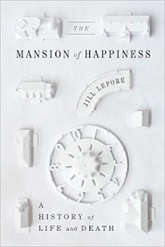 Well-written books about intellectual history are rare, but I had high expectations of Jill Lepore’s new work, The Mansion of Happiness: A History of Life and Death. Lepore is not only an academic historian (she is the Chair of the History and Literature Program at Harvard) but also a regular writer for The New Yorker. Her latest book is a collection of her essays about how American ideals about life and death have changed over the past several hundred years. “[M]y argument,” Lepore writes in the Preface, “is that the age of discovery, Darwin, and the space age turned ideas about life on earth topsy-turvy” (xi).
Of all the essays in the collection, the ones that stuck with me the most were her first and last. She begins the book with a blunt and powerful metaphor: life (the board game, that is). LIFE was part of my childhood collection of pixel-less games, which also included Stratego, Risk, Clue, Parcheesi, Thin Ice, and Go to the Head of the Class (all of which have recently been rescued from a mildewy corner of the crawl space in my parents’ house). But LIFE has a much more extensive genealogy than I realized before reading Lepore’s book.
The first board game of life in America was called The New Game of Human Life, and enjoyed popularity during the Revolutionary period. It reflected a much different view of living than the game that I played as a boy. “The [New Game of Human Life],” writes Lepore, “is a creed: life is a voyage that begins at birth and ends at death, God is at the helm, fate is cruel, and your reward lies beyond the grave. Nevertheless, to Puritans, who considered gambling the work of the devil, playing a game of life was, itself, an immoral pursuit” (xxi). (more…)
New history books (May 2012 edition)
Origins of institutions
 Four years ago, I wrote my senior history thesis about the beginnings of philosophical ideas in three ancient cultures. One of the most satisfying experiences in studying history is to learn the backstory of something ancient that still has a prominent place in current life. The following new books describe the origins of long-lasting institutions. Andrew Shryrock and Daniel Smail Lord’s new work, published last November, combines essays about language, food, kinship, and other topics related to life before humans started writing.
Half a year before that, political theorist Francis Fukuyama released a popular book about how bureaucratic and democratic political systems evolved from tribal societies and why imposing these sophisticated institutions on tribal cultures today causes problems. Sociologist Robert N. Bellah’s book, also published last year, about the evolution of religion seems a bit dry to read, but the ideas of this ambitious project are worth considering (my senior thesis was equally ambitious but only benefited from a year’s worth of work rather than a lifetime’s). Finally, rounding out the list is a new work coauthored by Kent Flanner and Joyce Marcus, The Creation of Inequality: How Our Prehistoric Ancestors Set the Stage for Monarchy, Slavery, and Empire. They describe their take on the origins of inequality in various social contexts and how to prevent it in the future.
 Moral Origins: The Evolution of Virtue, Altruism, and Shame. Christopher Boehm. Since the days of Peter Kropotkin, scientists have tried to restrain the impulse to turn descriptive Darwinism into prescriptive selfishness. Boehm here argues that altruism in human society is as favored by evolution as selfishness. (more…)
200 mph is the easy part
 As a kid, strong and shining institutions seem immutable: they arise from a misty golden past and will continue even stronger into the future. To see them decline instead of increase is something of a shock and (to me at least) a rallying cry to take up their cause.
I have always loved the instruments of accelerating human movement: automobiles, airplanes, and ships. In the ’90s, IndyCar racing was enjoying a wave of popularity in America: it was our homegrown open-wheel racing series. Not so anymore. On YouTube, which usually squelches unauthorized uploads of sports broadcasts with a silicon fist, videos of full races generously posted by the IndyCar authorities barely manage to scratch together a couple thousand views.
But I’ve a soft spot for lost causes and have been following every race of IndyCar this season. And the drama is truly exciting. During the first couple of races, the series and drivers were still recovering from the death of Dan Wheldon, the winner of the 2011 Indy 500, on the track last year. The cars were redesigned to improve safety (but also reduced speed and style).
IndyCar has also taken cues from the vastly more popular (in Europe, that is) Formula 1 series. They have resolved a long-standing dispute in the series by combining two competing organizations into one. They have been racing on street courses — not just the traditional ovals — for the past several years. In 2012, IndyCar introduced technological diversity to the cars by allowing teams to choose engine and chassis manufacturers. Currently, Chevy and Lotus have jumped into the game in addition to the incumbent Honda (although it’s both comical and sad to see Lotus cars break down so early in each race — their engines need more development). (more…)
New history books (April 2012 edition)
Below is a survey of books that were published in the past month or so and look to me like interesting reads (note: I have not actually read these books yet, and these are previews not reviews).
Russia
 Readers of this blog may notice that my interests have lately been skewed toward the world wars (in particular the air and naval conflicts). When I was a boy my imagination was fired up by stories from my grandfather, who told me about his service as an aviator for the Soviet Navy during the Second World War. I suspect this was when I first became interested in history (I also remember my grandfather reading me a children’s book about the ancient origins of everyday objects, such as matchsticks and clothing irons). Stories about pilots during World War II were my Iliad and Odyssey: they helped me understand concepts such as friendship and courage when I was very young.
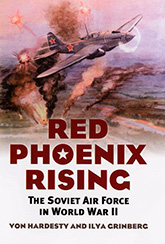
That’s why it’s particularly disappointing that there is hardly anything written in English about the air war on the Eastern Front during World War II. The struggle for dominance in the skies over Eastern Europe between 1941 and 1945 was the largest and longest air campaign in history according to amateur historian Christer Bergström (whose two sets of books about this conflict — Black Cross/Red Star and The Air Battle series — are some of the only comprehensive histories in English on the subject). That’s why I was eagerly awaiting the release in late March of a new book by Von Hardesty and Ilya Grinberg, titled Red Phoenix Rising: The Soviet Air Force in World War II. An overhaul of a previous work, Red Phoenix Rising will hopefully do justice to the drama and significance of this struggle (Bergström’s works, if meticulous, are admittedly dry to read). (more…)
New history books (March 2012 edition)
Below is a survey of books that were published in the past month or so and look to me like interesting reads (note: I have not actually read these books yet, and these are previews not reviews).
…
Soldiers’ stories
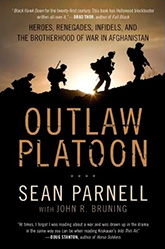 Great books temporarily lend the reader a new set of senses to experience a different reality. Sometimes as readers we recognize the types of books that propel us into a world that we have learned to enjoy, and we crave this release. Often I want to read military memoirs and observe how courageous individuals dealt with extreme adversity in moments of intense pressure. Of course I am witnessing their stories from a comfortable distance (often from a comfortable couch too) but then again I wouldn’t want to actually go through what those soldiers did firsthand. I just finished reading Tom Johnson’s excellent memoir, To the Limit, about his service as a Huey helicopter pilot in the Vietnam War. It gave me — a fixed-wing aviation buff — a newfound appreciation for the skill and warrior spirit of military helicopter pilots.
In February, Vietnam veteran Philip Keith published a book about a unit of tank troops in Vietnam — part of the Blackhorse Regiment — that responded to a distress call from an encircled company of American infantry. This group of men who fought through the enemy-held jungle to rescue their countrymen was not publicly recognized for their courageous deeds until 2009 when President Obama awarded their outfit the Presidential Unit Citation. Accounts of tank combat are inexplicably rare and Keith’s seems like an engrossing one. (more…)
New history books (February 2012 edition)

Below is a survey of books that were published in the past month or so and look to me like interesting reads (note: I have not actually read these books yet, and these are previews not reviews).
…
Russia
 No one in the world was surprised that Vladimir Putin was elected President of the Russian Federation yet again this year. News about Russian opposition movements — none too threatening to Putin’s grip on Russia — has been featured on the front pages of the Western press for the past couple of months. As that nation seems to be tragically slinking back into old habits of autocracy, historians have been looking to Russia’s past to find success stories when moderating forces opposed corrupt centralization of power. The primary question these historians seem to be asking is this: is autocracy inevitable in Russia?
A classic work of this type is Victor Leontovitsch’s The History of Liberalism in Russia, which was published in English for the first time this January (it was written in German and first released in 1957). In May of last year, Julia Berest published a biographical account of one of Russia’s early liberals during the Napoleonic era: Alexander Kunitsyn. A more recent contribution to the debate will be published in June of this year by the university press of my alma mater: the University of Wisconsin. Anton A. Fedyashin’s Liberals under Autocracy: Modernization and Civil Society in Russia, 1866-1904 utilizes the history of Russia’s primary liberal journal before the 1917 revolution, The Herald of Europe (Vestnik Evropy) as a lens into what he sees as a uniquely Russian brand of liberalism. (more…)
A generation passed away

From left to right: Florence Green (d. 2012; UK), Claude Choules (d. 2011; UK), Frank Buckles (d. 2011; US), and Erich Kästner (d. 2008; Germany)
The last surviving veteran of World War I, Florence Green, died last Saturday. The last American to have served in the war, Frank Buckles, as well as the last veteran to have actually seen combat, Claude Choules, died last year. Their generation saw the accumulation of European culture and technology–the hope of the world–burn for four years on the pyre of war. Theirs was also the first generation to sweep away the ashes and sculpt new strains of Western culture. But almost everything that they (and others after them) wrote, painted, said, and filmed bore the mark of the trauma of World War I.
With the death of these last veterans, we have lost the eyewitnesses to these events. All data now about that time will be secondhand. And collective memory fades quicker when individual memories are stored on hard drives, manuscripts, and film than in human heads.
But there are important lessons to be learned from the experiences this generation recorded. These lessons are best not forgotten, as the men and women would once have told us, who witnessed the radiant procession of humanity in the brilliant summer of 1914 unwittingly march to their oblivion.
That constitution is best which…
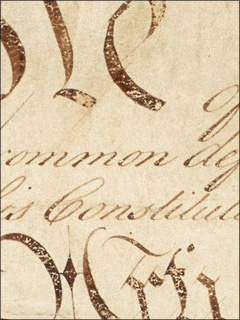 An upcoming study in the New York University Law Review finds that the U.S. Constitution is losing favor as a model for new constitutions around the world, reports the New York Times. Since the 1960s and 1970s, when the American document witnessed its height of popularity, foreign governments have turned to more progressive constitutions such as the Canadian Charter of Rights and Freedoms for inspiration.
The N.Y. Times article suggests three reasons for the decline in popularity worldwide of our Constitution: (1) America’s decreasing influence and reputation, (2) conservative judges’ insistence that the original intent of the Founding Fathers be considered in rulings, and (3) the absence of rights that are featured in other nations’ constitutions (e.g. rights to travel, food, education, and healthcare).
Should these be causes for concern for Americans?
Addressing the first reason, I think the greatest blows to American reputation happen when the U.S. initiates wars of questionable cause. American involvement in Vietnam and Iraq (2003-2011) soured America’s image around the world during a time when we needed support for broader conflicts (Cold War and the War on Terror, respectively). We should become more wary of beginning a war. (more…)
 HistoryJournal.org
leave a comment