New history books (January 2012 edition)

Below is a survey of books that were published in the past month or so and look to me like interesting reads (note: I have not actually read these books yet, and these are previews not reviews).
…
War of 1812
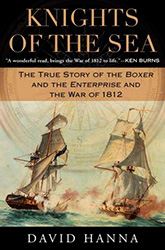 This year marks the 200th anniversary of the War of 1812. Many overlook this conflict, but it inaugurated important changes for America. During the war, America tried unsuccessfully to invade Canada, Washington D.C. was invaded and burned by the British, American Indian unification efforts (which were supported by the British) against the colonists were dealt a punishing blow, and the lyrics of the “Star Spangled Banner” were composed. After the war, British and American relations began to improve until eventually the two nations became each other’s closest ally in the 20th Century.
Several new books are being published in commemoration of the anniversary. Three that were released last year—two popular ones by George C. Daughan and Stephen Budiansky and a more scholarly one by Kevin D. McCranie—focus on the naval conflict. But the best new overview of the War of 1812 is by J.C.A. Stagg and is due to come out on March 31 of this year.
The book I’m most excited to read, though, is David Hanna’s Knights of the Sea: The True Story of the Boxer and the Enterprise and the War of 1812. The ships HMS Boxer and USS Enterprise dueled off the coast of Maine on a brisk autumn day. The captains of the opposing vessels were later buried together in a dual funeral on the American shore, inspiring the poem “My Lost Youth” by Henry Wadsworth Longfellow. (more…)
Memoirs of a Russian submariner
 In high school English class, I was taught about the three general types of conflict that one may encounter in literature: Man vs. Nature, Man vs. Man, and Man vs. Self. Memoirs from combatants of the Second World War are often as exciting to read as literature because all three types of conflict figure into them on a grand scale. But there is a fourth type of conflict that we didn’t learn about in class but which, particularly for the men and women of the Soviet armed forces, added that extra dimension of drama: Man vs. Machine.
The nation that brought the world Lada and Zhiguli cars–which asked of their owners to spend nearly every weekend under their jacked-up chassis salving their ever-irritated metal bowels–produced submarines during WWII that would never quite pass muster in an American or German shipyard. This run-down state of submersible machinery can be fully appreciated by reading Victor Korzh’s memoir, Red Star Under the Baltic: A Soviet Submariner in WWII.
As the chief engineer aboard these subs, Korzh knew every nut and bolt and describes their mechanical failures with the technical detail befitting a master. But the inability of Soviet designers and shipyards to perfect submarine design is no stain on the reputation of the Russian sailor. On the contrary, the Russian submariners’ ability to not only survive but also sink many German merchantmen in the unforgiving seas of the Baltic is a testament to their boldness and technical ingenuity. (more…)
Love of art in the Siege of Leningrad

This first of a series of posts, called “In the Abstract”, are ideas for topics for new history books. Sometimes historians, I think, shoot themselves in the foot by framing their research projects in an uninteresting way. Others, though, do this masterfully and create history books that are engaging, relevant, insightful, and bring the characters and world of another age to life not only for the academic community but for the general public too. Often the path of success or failure begins in the choice of topic. In an effort to sharpen my skills in framing historical topics, I welcome your criticism and comments of my imaginary abstract.
…
ART is frequently seen as flourish to life for those that can afford leisurely activities. Love of art is something that supposedly dies in people when other, more basic, human needs are not being met. But to a select group of Russian writers, poets, artists, and musicians that lived in Leningrad during the siege of 1941-44 by the German army, the drive to produce new creative work did not vanish. Amid the base struggle for survival in that city under blockade, with starvation, violence, death, cannibalism, terror, and inhumanity permeating their existence, many artists in Leningrad later wrote that they experienced the strongest artistic drive of their lives. There has not been a book in English devoted to their stories. A book about the individuals, meeting places, and creative works that these artists produced (among them Dmitri Shostakovich’s Symphony No. 7–the “Leningrad Symphony”) under the most unpromising circumstances would be a testament to the basic importance of creativity in human life.
History off the press (December ’11 edition)

Below is a survey of books that were published in the past month or so and look to me like interesting reads (note: I have not actually read these books, and these are previews not reviews).
…
Africa
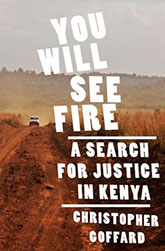 I’m currently reading William L. Shirer’s The Rise and Fall of the Third Reich, and one of among many striking things about Nazi Germany is how easily a multitude of religious leaders in that country kowtowed to Hitler’s religious decrees (which needless to say were staggering in their impiety—replacing the Bible in pulpits with Mein Kampf, for instance). Religions like Christianity derive their power from writing and oratory. But if those mesmerizing words are not backed by deeds when the going gets rough (i.e. when the Gestapo will kill you if you continue practicing authentic Christianity) then such sermonizing appears in hindsight like idle chatter.
That’s why I can’t help but admire a guy like Sam Childers. After he converted to Christianity, he traded a life of drugs, motorcycle gangs, and chasing women in America to become a machine-gun armed protector of orphans and other destitute children in violence-ravaged Sudan. That’s some tough, in-your-face Christianity and not of the “Have you heard the Good Word? Here, take a pamphlet” variety. Childers has published a memoir of his experiences. (more…)
“Song of a Fighter Pilot”
 Vladimir Vysotsky wrote such evocative songs about World War II that it’s impossible to tell that he himself didn’t serve in that conflict. His verse on the theme of friendship is especially amazing.
Because of songs like his and the Russian culture of my upbringing, the symbolism of World War II (or, as the Russians call it, The Great Patriotic War) has stayed with me as a kind of arch-metaphor for the human condition.
I was listening today to one of my favorite songs by Vysotsky called Pesnya lyotchika-istrebitelya: “Song of a Fighter Pilot”. It is one of the greatest poems about friendship that I have ever read, and I decided to translate it into English. My translations skills are limited, but though my version inevitably may have errors, I have done my best to convey both the meaning and the flow of the song. The original, like most Russian poems and songs, has a rhyme scheme.
The song is about two Russian fighter pilots in World War II that find themselves embroiled in a losing battle with a larger German fighter formation. You can listen to the original song on YouTube and read the lyrics in Russian here.
…
Song of a Fighter Pilot
By Vladimir Vysotsky
(Translated by Alex L.)
Eight of them and two of us. Our prospects before battle
Aren’t bright, but we’ve committed to the fight.
Seryozha!* Hold on, it’s looking dim,
But we we have to get an edge in the game. (more…)
History off the press (November ’11 edition)

Below is a survey of books that were published in the past month or so and look to me like interesting reads (note: I have not actually read these books, and these are previews not reviews).
…
Russia
 My parents’ generation grew up in the Soviet Union reading and owning volumes of classical literature. Despite my parents’ polemics, my friends and I somehow found playing “Sonic the Hedgehog” on the SEGA Genesis video game console when we were younger more compelling than reading James Fenimore Cooper. Where did this cultural gap come from? A new book by Katerina Clark examines how the Soviet fascination with world literature began in the 1930s as Soviet leaders and intellectuals tried to cast Moscow as a cosmopolitan beacon of secular culture for the world. This mindset during the Stalinist era must have, it seems to me, influenced my parents’ generation to become voracious readers.
Soviet life is still a rich field for contemporary historical study and literature. But the Western imagination is more captivated by an earlier time in Russian history: the dynasty of the Romanovs. Robert K. Massie has just published a book titled Catherine the Great: Portrait of a Woman. His previous biography of a Romanov monarch, Peter the Great, won a Pulitzer Prize in 1981. Catherine continued the project begun by Peter of making Russia one of the preeminent nations of Europe and was friends with the likes of Voltaire, Frederick the Great, and even John Paul Jones. Massie’s new work about the most influential female ruler in all of Russian history will likely remain the definitive biography on Catherine for many years. (more…)
History off the press (October ’11 edition)

Swords to plowshares
President Obama recently announced that the United States will recall all of its armed forces personnel from Iraq by the end of 2011. This is a strange outcome for those of us who remember the seemingly insurmountable setbacks created by the insurgency before the 2007 surge of American troops unraveled the extremists’ grip on the country. It was hard to see back then that the situation in Iraq could improve. But it did. The following books explore in a unique way the nature of organized violence in the contemporary world.
…
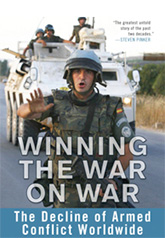 Although we may not realize it from all of the news dispatches dripping with depressing forebodings of disaster either due to economic or glacial meltdown, there are reasons to be optimistic about the current state of the world. Joshua S. Goldstein, in a new book called Winning the War on War: The Decline of Armed Conflict Worldwide, makes the case that the human race is freer from war now than it has ever been. The facts tell a counterintuitive but inspiring story: there are currently no nations at war in the world (only civil wars are going on) and last year had one of the lowest death rates from armed conflict in history.
Along similar lines, Steven Pinker has just published a similar work. Pinker makes the same observation – “we may be living in the most peaceful time in our species’s existence” – but approaches the subject from the perspective of psychology, his field of study, rather than international affairs. Both of these perspectives are worth keeping in mind the next time you hear a pundit on cable news or a sensationalistic author prophesying apocalypse for Western civilization just to get your attention. (more…)
Driving at the speed of flight
 I can’t say I enjoy Jay Leno’s jokes as much as I do the work of Jon Stewart, Stephen Colbert, and David Letterman. But man does the guy have an awesome car collection.
I know next to nothing about vintage car restoration, but I can appreciate a sleek-looking and rumble-producing automobile. When I came across Jay Leno’s video of his 1915 Hispano-Suiza Aero Engine Car restoration (see part 1, part 2 and part 3), though, I almost started drooling. The reason is because the restored car combines in an engaging package some things that, well, just make me salivate like a dog sensing dinner: aviation, World War I history, craftsmanship, and speed.
The 1915 machine is no ordinary automobile. It’s fitted with an engine taken from a World War I fighter airplane. As Wikipedia informed me, after the First World War ended, surplus airplane engines were relatively cheap and vastly more powerful than what cars were then using. Some auto engineers decided not to let this opportunity pass and created cars with automobile chassis and airplane engines. Such aero-engined cars were a brief trend in auto racing during the inter-war period.
The Hispano-Suiza engine is the motor that was used to power the S.E.5, a British fighter plane during World War I. This was the primary aircraft of No. 56 Squadron RFC (Royal Flying Corps), the famous unit of expert flyers and warriors—such as James McCudden, Albert Ball, and Cecil Lewis (the last of whom wrote a now-rare but fascinating and honest memoir of his war years, titled Sagittarius Rising)—who helped defeat the imperial German air force. (more…)
History off the press (September ’11 edition)

Below the fluorescent lights of an auditorium, a professor lectures to students about current historical ideas gleamed from countless of hours of collective research and collegiate debates. A journalist, after decades of reporting on current events in a foreign land, publishes a book about a historical subject she deems particularly important to understanding what is happening there today. A popular film gets released about the past that lights up the public imagination to a certain era of history.
Public recollection of the past happens in many ways. To follow every one of these events, which occur daily, is almost impossible. But patterns emerge from observation, though understanding why they occur is sometimes difficult. In the following previews of new books, I hope to draw attention to trends in the public discourse about history. A more detailed look at the context and causes of these dialogues, though, requires further research.
Fighting to the last
Ever since I first heard the lyrics of Alexander Gorodnitsky’s song “Atlases”, the Siege of Leningrad has become elevated in my mind as an eternal symbol of people’s remarkable ability to endure suffering and emerge victorious. The symbols and metaphors of the song are ingenious. In the famous Hermitage Museum of St. Petersburg, there are sculptures of Atlas from Greek mythology that act as structural columns for a portico . The Soviet men and women who died to stymie the advance of Nazi warriors before Leningrad are, to Gorodnitsky, like the Atlases of the Hermitage, “up-holding the sky / with arms of stone”. (more…)
History off the press (August ’11 edition)

Have your relatives ever told you stories about your ancestors that made you reevaluate your own identity? My grandmother once told me that her father (my great-grandfather) possessed a mellifluous voice and staged concerts for his fellow Allied soldiers imprisoned in a German POW camp during World War I. Hearing this story, it made me question how genetic quality could dissipate so quickly, for my vocal chords can’t produce a single melodic note if my family’s honor depended on it.
Like talking to our grandparents about departed relatives, reading history can change our perspective about our own selves or our community. I selected the books for August (remember, these are previews, not reviews: I have not read these books yet) that drew me in either because they addressed a need for self-knowledge or promised to inform me about the world around me. As a result, almost of them, I noticed later, have to do with U.S. history. But I think our subjectivity is what lights our interest afire. Our bias is our personality, and without it history narratives wither before us like dehydrated fruit.
New York City roots
For several months, I’ve had an itch to discover “literary” neighborhoods in Chicago. Seeking counsel, I asked fellow Chicagoans (full disclosure: I live in the suburbs, not the city proper) where writers live or congregate in the Windy City. No one had an answer, which made me despair that the only destination for writers in the United States was prohibitively-expensive Manhattan. (more…)
 HistoryJournal.org

leave a comment