Eddie Rickenbacker: A very interesting life
I’ve always found the historical figure of Eddie Rickenbacker very interesting. In one person, in one life, he combines a lot of the things that really stir my imagination: aviation (he was the leading U.S. ace in WWI), Indy car racing (he was one of the earliest competitors in the Indy 500), airliners (he was an executive of Eastern Air Lines), and the entrepreneurial spirit (he had other business enterprises, including an automobile company).
Back in Chicago, I have a book about the exploits of Rickenbacker’s 94th Aero Squadron called Hat in the Ring: The Birth of American Air Power in the Great War. I began reading it before coming to Edmonton and thought it was really good. Unfortunately, they don’t have it at local libraries here so I picked up W. David Lewis’s biography (Eddie Rickenbacker: An American Hero in the Twentieth Century) instead.
Lewis, an elderly professor of history, combines years of scholarly experience with a childlike fascination with the figure of Rickenbacker that dates to his youth. He seems to provide a balanced view of the man, revealing his positive and negative qualities.
An insider’s view
 I find current events much more interesting when I feel like I have an insider’s view of the news. I think it comes down to having a certain sense of comprehension or even control of what’s going on in the world. Sometimes I lapse into a mindset of believing that the forces that move events around the globe are incomprehensible to those that are far from the centers of power. At that point, I begin to lose interest in current events and politics for a while.
Then certain experiences snap me out of this apathetic stupor. Once, it was watching the excellent movie Blood Diamond. More recently, it was watching the show Homeland and then reading Mark Mazzetti’s work, The Way of the Knife: The CIA, a Secret Army, and a War at the Ends of the Earth. Mazzetti is a journalist for The New York Times that has really dug deep into the foundations of several powerful institutions to create an insightful story about America’s new way of waging war.
In my opinion, The Way of the Knife is superbly written. It reminds me of perhaps my favorite work of nonfiction, The Metaphysical Club. Both books follow a kind of formula which has the effect of gluing my attention right to the narrative. And that formula is:
- Chapters that can stand on their own as individual pieces of excellent writing;
- Brief but revealing biographical stories of the characters (even minor ones) mentioned;
- The threads of each chapter tied loosely together into an overarching thesis or general idea.
My goal is to get better at this style of writing myself. When done well, I think it can make almost any historical topic interesting to read about.
The first restaurants
 Academic writing does not necessarily have to be boring. I was reminded of this while reading Rebecca L. Spang’s book on a specific subject in French history, titled The Invention of the Restaurant: Paris and Modern Gastronomic Culture. I picked this book up at the library because I have been interested in cooking lately, and one of the best ways for me to sustain my curiosity in a topic is to learn about its history.
One of the first recipes in a cookbook that has inspired my recent culinary adventures, Classic Techniques for Fine Cooking, is a beef consommé. This meal, if prepared correctly, takes many hours to make and produces basically a light appetizer of delicious broth with a few veggies thrown in for substance. It seems almost like a waste of time, but I found out that these clear soups have a special place in the history of French cuisine.
The first restaurants were opened in France in the eighteenth century and served these clear soups exclusively. These restaurants capitalized on the popular beliefs of the time that those suffering from weak digestion or “weak chests” could restore themselves with cups of bouillon, which had all of the flavors of meat and vegetables without their actual substance.
Spang traces this development in The Invention of the Restaurant. Because she incorporates biographical information and cultural detail into her narrative, her work still appeals to the public even though it’s written in an academic style. I’m enjoying reading this book, and it inspires my experiments in both the kitchen and in the library.
Biographies of Paul the Apostle
 A few days ago, I started reading a book that I bought about a year ago in a bookstore’s bargain aisle. The book is Paul by E.P. Sanders from the “A Brief Insight” series. The letters of the Apostle Paul form a big chunk of the New Testament. In those letters, his unique way of addressing problems in religious communities have had an enormous influence on the development of Christianity.
But Sanders’s 200-page work is the first book I’ve ever read focused specifically on Paul. Before I even finished reading the first chapter, I already started thinking about what the next book would be that I would read about Paul. I do this often: whenever I get interested in a new topic, I go on Amazon.com and try to find the most authoritative book on that subject. It’s handy information. Sometimes I even make a short bibliography of what the first books would be that I would read if I were to study the topic more closely.
It’s always satisfying to find the one definitive book on a subject: a recently-published and comprehensive resource you can turn to that will bring you up to speed on a subject in one fell swoop. Interested in Johannes Brahms? A quick search on Amazon.com will reveal that Jan Swafford’s biography, a 752-page tome decorated with 33 reviews averaging 4.5/5 stars, is beyond a shadow of a doubt the place to turn for all your Brahms needs. (more…)
New history books (August-December 2012 edition)

Below are new books published in the second half of 2012 that seemed to me like really interesting reads in my favorite fields (ancient philosophy and military history). This is a condensed version of my typical monthly books post, but I hope to return to my usual reviews and previews again next month.
…
December
Churchill and Seapower. Christopher M. Bell. Churchill was a leading naval strategist in both the First and Second World War. This is the first systematic study of his role in naval affairs and should be an informative read.
Aviation (rarities)
A Higher Call: An Incredible True Story of Combat and Chivalry in the War-Torn Skies of World War II by Adam Makos and Larry Alexander
Operation KE: The Cactus Air Force and the Japanese Withdrawal from Guadalcanal by Roger Letourneau and Dennis Letourneau
The North African Air Campaign: U.S. Army Air Forces from El Alamein to Salerno by Christopher M. Rein
Viper Pilot: A Memoir of Air Combat by Dan Hampton
Blue Moon over Cuba: Aerial Reconnaissance during the Cuban Missile Crisis by William B. Ecker and Kenneth V. Jack
Notable mentions
Ships of Oak, Guns of Iron: The War of 1812 and the Forging of the American Navy by Ronald Utt
Demosthenes of Athens and the Fall of Classical Greece by Ian Worthington
The First Thousand Years: A Global History of Christianity by Robert Louis Wilken
… (more…)
New history books (July 2012 edition)
Scholarship of an empire
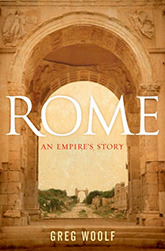 There are really two narratives of the Roman empire. The first one picks up where the Iliad ends, follows the story of Aeneas until the time of the early kings of Rome, observes with admiration the Roman republic, and illustrates the glories and flaws of the Roman emperors. This is the traditional story of ancient Rome.
The second type of narrative is the academic one, which often leaves chronology by the wayside and examines the Roman empire by topic, often sociologically. Greg Woolf’s new book, Rome: An Empire’s Story, seems to be written for the niche of people who are well familiar with the first, traditional, narrative of Rome but have no knowledge of (but a desire to learn) the second, scholarly, dialogue about the empire.
Although Woolf’s writing didn’t inspire an enormous amount of enthusiasm from this reader, the most interesting chapter for me was the second one: “Empires of the Mind.” Reading this chapter made me wonder why it was that Rome apart from all other ancient empires has such a lasting existence in our world. Woolf here also discusses sociological categorization of empires and describes Rome as a conquest state, an entity dependent on political expansion for its very survival. I think such a breakdown of terms like “empire” is useful because, without further reflection, one may assume erroneously that the Roman empire was more similar to, say, the American empire than was actually the case. The United States may arguably be an imperial power but it is not a conquest state. (more…)
U-boats in World War I
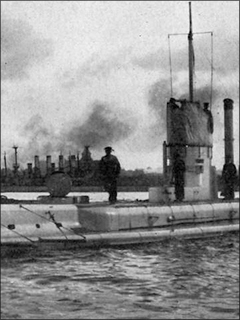 I’ve been interested in submarine warfare 0f the Second World War since I was in middle school. There are a lot of books written in English about the German U-boat campaign targeting Allied ships in the Atlantic and also the American submarine war against Japanese merchant shipping in the Pacific. Relatively little has been written in recent times, though, about submarine operations of any nation during the First World War.
That’s why I was happy to discover a copy of Edwyn Gray’s book, The U-boat War: 1914-1918 (which was originally published in the 1970s as The Killing Time) in Manhattan’s mecca for rare books: the Strand Book Store. I’m really glad I bought this book, because after reading it, I disabused myself of several erroneous notions about these early German submarine operations.
For example, I previously believed that German submarines during WWI in comparison to their counterparts in WWII
- were generally smaller, slower, and carried less fuel, crew, and torpedoes,
- exclusively operated in the coastal waters of Western Europe, and
- did not wage as large or effective of a campaign against merchant shipping.
All of these preconceptions turned out to be false. By way of comparing the U-boat campaigns of the First and Second World War, I turned to some data from uboat.net, an ongoing research project by an amateur historian which I’ve enjoyed visiting since I first started using the internet in the mid-1990s.
Just looking at how many ships U-boats attacked during each war, it’s evident that the number of ships hit by submarines in the 1910s surpasses the totals of the 1940s: (more…)
New history books (June 2012 edition)
U.S. intellectual history
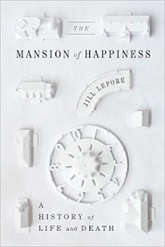 Well-written books about intellectual history are rare, but I had high expectations of Jill Lepore’s new work, The Mansion of Happiness: A History of Life and Death. Lepore is not only an academic historian (she is the Chair of the History and Literature Program at Harvard) but also a regular writer for The New Yorker. Her latest book is a collection of her essays about how American ideals about life and death have changed over the past several hundred years. “[M]y argument,” Lepore writes in the Preface, “is that the age of discovery, Darwin, and the space age turned ideas about life on earth topsy-turvy” (xi).
Of all the essays in the collection, the ones that stuck with me the most were her first and last. She begins the book with a blunt and powerful metaphor: life (the board game, that is). LIFE was part of my childhood collection of pixel-less games, which also included Stratego, Risk, Clue, Parcheesi, Thin Ice, and Go to the Head of the Class (all of which have recently been rescued from a mildewy corner of the crawl space in my parents’ house). But LIFE has a much more extensive genealogy than I realized before reading Lepore’s book.
The first board game of life in America was called The New Game of Human Life, and enjoyed popularity during the Revolutionary period. It reflected a much different view of living than the game that I played as a boy. “The [New Game of Human Life],” writes Lepore, “is a creed: life is a voyage that begins at birth and ends at death, God is at the helm, fate is cruel, and your reward lies beyond the grave. Nevertheless, to Puritans, who considered gambling the work of the devil, playing a game of life was, itself, an immoral pursuit” (xxi). (more…)
New history books (May 2012 edition)
Origins of institutions
 Four years ago, I wrote my senior history thesis about the beginnings of philosophical ideas in three ancient cultures. One of the most satisfying experiences in studying history is to learn the backstory of something ancient that still has a prominent place in current life. The following new books describe the origins of long-lasting institutions. Andrew Shryrock and Daniel Smail Lord’s new work, published last November, combines essays about language, food, kinship, and other topics related to life before humans started writing.
Half a year before that, political theorist Francis Fukuyama released a popular book about how bureaucratic and democratic political systems evolved from tribal societies and why imposing these sophisticated institutions on tribal cultures today causes problems. Sociologist Robert N. Bellah’s book, also published last year, about the evolution of religion seems a bit dry to read, but the ideas of this ambitious project are worth considering (my senior thesis was equally ambitious but only benefited from a year’s worth of work rather than a lifetime’s). Finally, rounding out the list is a new work coauthored by Kent Flanner and Joyce Marcus, The Creation of Inequality: How Our Prehistoric Ancestors Set the Stage for Monarchy, Slavery, and Empire. They describe their take on the origins of inequality in various social contexts and how to prevent it in the future.
 Moral Origins: The Evolution of Virtue, Altruism, and Shame. Christopher Boehm. Since the days of Peter Kropotkin, scientists have tried to restrain the impulse to turn descriptive Darwinism into prescriptive selfishness. Boehm here argues that altruism in human society is as favored by evolution as selfishness. (more…)
 HistoryJournal.org
leave a comment