New history articles (August-December 2012 edition)
Since I’ve fallen behind on my monthly articles and books posts, I’ve decided to condense the past several months into a couple final posts for the year. That way, I can start 2013 afresh with the regular format, reviewing and previewing books and articles every month. Below are the articles for the second half of 2012 that interested me but that I haven’t had a chance to review on this blog.
…
December
“Vernacular Metaphysics: On Terrence Malick’s The Thin Red Line“ by Robert Pippin in Critical Inquiry (Winter 2013).
“How Motion Pictures Industrialized Entertainment” by Gerben Bakker in The Journal of Economic History (December 2012).
“Ethical Progress as Problem-Resolving” by Amanda Roth in The Journal of Political Philosophy (December 2012).
…
November
“Intuiting Gods: Creed and Cognition in the Fourth Century” by Marilyn Dunn in Historical Reflections (Winter 2012).
“Imagining the Unconscious” by Wouter J. Hanegraaffa in Intellectual History Review (Winter 2012).
“Overshadowed New York” by Cyrus R. K. Patell and Bryan Waterman in American Literary History (Winter 2012).
… (more…)
New history articles (July 2012 edition)


“Virtually a Historian: Blogs and the Recent History of Dispossessed Academic Labor” by Claire Bond Potter in Historical Reflections (Summer 2012).
Like the recording and newspaper industries, humanities departments in universities have struggled to generate enough income for their practitioners in the Information Age. Many members of this “dispossessed academic labor” pool vent their frustrations with the system online on blogs. Potter sees these (often anonymous) online criticisms as one of the only honest records available of how unemployed and underemployed historians truly feel about the labor conditions in higher education.
As someone on the brink of entering the profession of history, I find myself somewhat repulsed by the stygian tone of the more vociferous academic blogs. Part of me blames these down-and-out historians for not being more creative in how they practice history: is trudging the academic career path that they profess to hate really the only option they see for themselves? Why not reach out to the public, which finds history intrinsically interesting and presents a larger market for writing than the academy?
But the more empathetic part of me understands that such a recommendation is glib and naive. It is not so wise to abandon the academy completely as to reform it. And that won’t come without an honest — and often unpleasant — voicing of dissatisfaction with the current state of things. (more…)
New history books (July 2012 edition)

Scholarship of an empire
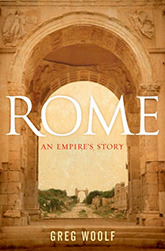 There are really two narratives of the Roman empire. The first one picks up where the Iliad ends, follows the story of Aeneas until the time of the early kings of Rome, observes with admiration the Roman republic, and illustrates the glories and flaws of the Roman emperors. This is the traditional story of ancient Rome.
The second type of narrative is the academic one, which often leaves chronology by the wayside and examines the Roman empire by topic, often sociologically. Greg Woolf’s new book, Rome: An Empire’s Story, seems to be written for the niche of people who are well familiar with the first, traditional, narrative of Rome but have no knowledge of (but a desire to learn) the second, scholarly, dialogue about the empire.
Although Woolf’s writing didn’t inspire an enormous amount of enthusiasm from this reader, the most interesting chapter for me was the second one: “Empires of the Mind.” Reading this chapter made me wonder why it was that Rome apart from all other ancient empires has such a lasting existence in our world. Woolf here also discusses sociological categorization of empires and describes Rome as a conquest state, an entity dependent on political expansion for its very survival. I think such a breakdown of terms like “empire” is useful because, without further reflection, one may assume erroneously that the Roman empire was more similar to, say, the American empire than was actually the case. The United States may arguably be an imperial power but it is not a conquest state. (more…)
New history articles (June 2012 edition)
With this post, I’m starting a new monthly article series called “Historical Proceedings” that reviews a sampling of the new historical articles published in mostly academic journals (but also some popular magazines). I’m a few months behind on these and also on my monthly posts about new history books, but I’m working to catch up.
As with the books, I’ll be choosing articles every month that I think are interesting, enlightening, and well written (all, admittedly, subjective criteria). I hope these posts inspire you to read new works of history and to share your comments with me below.
…
 “The Repression of Soviet Koreans during the 1930s” by Alexander Kim in The Historian (Summer 2012).
Joseph Stalin killed so many people from so many different communities during his purges of the 1930s that it’s hard to deny the veracity of the quote that is often attributed to him: “a single death is a tragedy; a million deaths is a statistic.” To understand the human toll of the purges, it helps to take a closer look at one cross-section of the population that was affected by them.
Alexander Kim writes in The Historian, a publication of the Phi Alpha Theta Historical Honor Society, about Soviet Koreans who were forcibly relocated from their homes in the Far East to barren lands in Kazakhstan. That they were accused of trumped-up charges of spying for the enemies of the Soviet Union was not unique by Soviet standards of the 1930s. But Kim describes how the Soviet Koreans’ integrality to the local economy (they were adept vegetable farmers) and easy ability to escape Soviet authorities by crossing the border into China delayed their repression by Stalin’s agents. That was something most other groups were not able to do during the purges. (more…)
U-boats in World War I
 I’ve been interested in submarine warfare 0f the Second World War since I was in middle school. There are a lot of books written in English about the German U-boat campaign targeting Allied ships in the Atlantic and also the American submarine war against Japanese merchant shipping in the Pacific. Relatively little has been written in recent times, though, about submarine operations of any nation during the First World War.
That’s why I was happy to discover a copy of Edwyn Gray’s book, The U-boat War: 1914-1918 (which was originally published in the 1970s as The Killing Time) in Manhattan’s mecca for rare books: the Strand Book Store. I’m really glad I bought this book, because after reading it, I disabused myself of several erroneous notions about these early German submarine operations.
For example, I previously believed that German submarines during WWI in comparison to their counterparts in WWII
- were generally smaller, slower, and carried less fuel, crew, and torpedoes,
- exclusively operated in the coastal waters of Western Europe, and
- did not wage as large or effective of a campaign against merchant shipping.
All of these preconceptions turned out to be false. By way of comparing the U-boat campaigns of the First and Second World War, I turned to some data from uboat.net, an ongoing research project by an amateur historian which I’ve enjoyed visiting since I first started using the internet in the mid-1990s.
Just looking at how many ships U-boats attacked during each war, it’s evident that the number of ships hit by submarines in the 1910s surpasses the totals of the 1940s: (more…)
New history books (June 2012 edition)
U.S. intellectual history
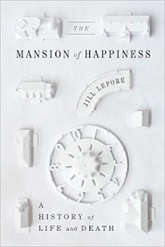 Well-written books about intellectual history are rare, but I had high expectations of Jill Lepore’s new work, The Mansion of Happiness: A History of Life and Death. Lepore is not only an academic historian (she is the Chair of the History and Literature Program at Harvard) but also a regular writer for The New Yorker. Her latest book is a collection of her essays about how American ideals about life and death have changed over the past several hundred years. “[M]y argument,” Lepore writes in the Preface, “is that the age of discovery, Darwin, and the space age turned ideas about life on earth topsy-turvy” (xi).
Of all the essays in the collection, the ones that stuck with me the most were her first and last. She begins the book with a blunt and powerful metaphor: life (the board game, that is). LIFE was part of my childhood collection of pixel-less games, which also included Stratego, Risk, Clue, Parcheesi, Thin Ice, and Go to the Head of the Class (all of which have recently been rescued from a mildewy corner of the crawl space in my parents’ house). But LIFE has a much more extensive genealogy than I realized before reading Lepore’s book.
The first board game of life in America was called The New Game of Human Life, and enjoyed popularity during the Revolutionary period. It reflected a much different view of living than the game that I played as a boy. “The [New Game of Human Life],” writes Lepore, “is a creed: life is a voyage that begins at birth and ends at death, God is at the helm, fate is cruel, and your reward lies beyond the grave. Nevertheless, to Puritans, who considered gambling the work of the devil, playing a game of life was, itself, an immoral pursuit” (xxi). (more…)
New history books (May 2012 edition)
Origins of institutions
 Four years ago, I wrote my senior history thesis about the beginnings of philosophical ideas in three ancient cultures. One of the most satisfying experiences in studying history is to learn the backstory of something ancient that still has a prominent place in current life. The following new books describe the origins of long-lasting institutions. Andrew Shryrock and Daniel Smail Lord’s new work, published last November, combines essays about language, food, kinship, and other topics related to life before humans started writing.
Half a year before that, political theorist Francis Fukuyama released a popular book about how bureaucratic and democratic political systems evolved from tribal societies and why imposing these sophisticated institutions on tribal cultures today causes problems. Sociologist Robert N. Bellah’s book, also published last year, about the evolution of religion seems a bit dry to read, but the ideas of this ambitious project are worth considering (my senior thesis was equally ambitious but only benefited from a year’s worth of work rather than a lifetime’s). Finally, rounding out the list is a new work coauthored by Kent Flanner and Joyce Marcus, The Creation of Inequality: How Our Prehistoric Ancestors Set the Stage for Monarchy, Slavery, and Empire. They describe their take on the origins of inequality in various social contexts and how to prevent it in the future.
 Moral Origins: The Evolution of Virtue, Altruism, and Shame. Christopher Boehm. Since the days of Peter Kropotkin, scientists have tried to restrain the impulse to turn descriptive Darwinism into prescriptive selfishness. Boehm here argues that altruism in human society is as favored by evolution as selfishness. (more…)
200 mph is the easy part
 As a kid, strong and shining institutions seem immutable: they arise from a misty golden past and will continue even stronger into the future. To see them decline instead of increase is something of a shock and (to me at least) a rallying cry to take up their cause.
I have always loved the instruments of accelerating human movement: automobiles, airplanes, and ships. In the ’90s, IndyCar racing was enjoying a wave of popularity in America: it was our homegrown open-wheel racing series. Not so anymore. On YouTube, which usually squelches unauthorized uploads of sports broadcasts with a silicon fist, videos of full races generously posted by the IndyCar authorities barely manage to scratch together a couple thousand views.
But I’ve a soft spot for lost causes and have been following every race of IndyCar this season. And the drama is truly exciting. During the first couple of races, the series and drivers were still recovering from the death of Dan Wheldon, the winner of the 2011 Indy 500, on the track last year. The cars were redesigned to improve safety (but also reduced speed and style).
IndyCar has also taken cues from the vastly more popular (in Europe, that is) Formula 1 series. They have resolved a long-standing dispute in the series by combining two competing organizations into one. They have been racing on street courses — not just the traditional ovals — for the past several years. In 2012, IndyCar introduced technological diversity to the cars by allowing teams to choose engine and chassis manufacturers. Currently, Chevy and Lotus have jumped into the game in addition to the incumbent Honda (although it’s both comical and sad to see Lotus cars break down so early in each race — their engines need more development). (more…)
“Go, present yourself to Ahab”
 Herman Melville’s Moby Dick is one of those classic novels which I’ve picked up to read several times in former years — only to put it back on the shelf. My enthusiasm has died several deaths on the rack of 19th-century prose. But when I started reading it again last week, I was finally hooked.
What I didn’t realize before was that Moby Dick is a retelling (or at least it seems this way to me through page 80) of the biblical book of Jonah. That book is one of the pithiest in the Bible. In the span of four chapters, Jonah tries to escape from an errand God has earmarked for him but is finally persuaded to return and complete it after spending three days repenting in the stomach of a whale.
Melville spells out the analogy to the Jonah story by having his narrator — Ishmael — listen to a sermon about the book of Jonah early in Moby Dick. The sermon is delivered by an old sea captain turned pastor in a church which resembles as much the inside of a whaling ship as it does a place of worship. But this captain-pastor adds many details out of his imagination to the story of Jonah. Much like Melville in the entirety of Moby Dick.
Ishmael represents Jonah, escaping from unpleasant realities on land by running away to sea. If Ishmael is Jonah, his cannibal friend Queequeg may represent the Gentile shipmates with whom Jonah sailed. Captain Ahab may represent the wicked Ninevites in the book of Jonah. But Ahab is also an idolatrous Israeli king talked about in several other books of the Hebrew Bible. Captain Ahab’s obsession with the white whale seems to be like the idol-worship that is condemned in many books of the Hebrew Bible.
I’m just a fraction of the way into the book, but I like how Melville has taken a well-worn short story from the Bible and created an elaborate modern version out of it. Moby Dick, published in 1851, may seem like a far-removed story to 21st-century American readers, but if you keep in mind that it’s retelling a story that’s actually over 2,000 years old, Herman Melville’s novel comes off as remarkably contemporary.
New songs for old strings
 Jake Runestad is the same age as me (26) and is already making a contribution to society. His new project is described in “Out of War, a Symphony,” an article in the New York Times blog At War. Runestad is composing a three-part piece for orchestra, piano, and chorus hoping to capture the emotional journey that soldiers experience when they go to war and back. He is relying on poetry, memoirs, and interviews with American veterans of the wars in Vietnam, Afghanistan, and Iraq to get a sense of their experiences.
Aside from the social benefit of lifting the veil (if only slightly) for the civilian public about what warfare wreaks on the psyche, Runestad is also helping the cause of classical music. Like other forms of expression which originated many generations ago (including, for that matter, the profession of history) classical music has to confront the stigma of irrelevance. A great way of exhibiting the richness of expression that classical music has to offer is to pair it with the emotional experiences of a new generation. New wine may fare better in new skins, but nothing enlivens the sound of an old instrument like a new song.
 HistoryJournal.org
leave a comment